Product Liability and Product Safety in Türkiye: From Market Entry to Recall and Claims
A serious product issue can engage regulatory compliance, corrective action, compensation liability and consumer remedies at the same time. This briefing examines the Turkish product-safety framework from market entry through traceability, recall and third-party claims, with particular attention to manufacturers, importers, distributors and online sales.
- Written by
- Berat Murat Terzioğlu, Director of Legal & International Coordination
- Legal review
- Yavuz Selim Terzioğlu, Founding Partner
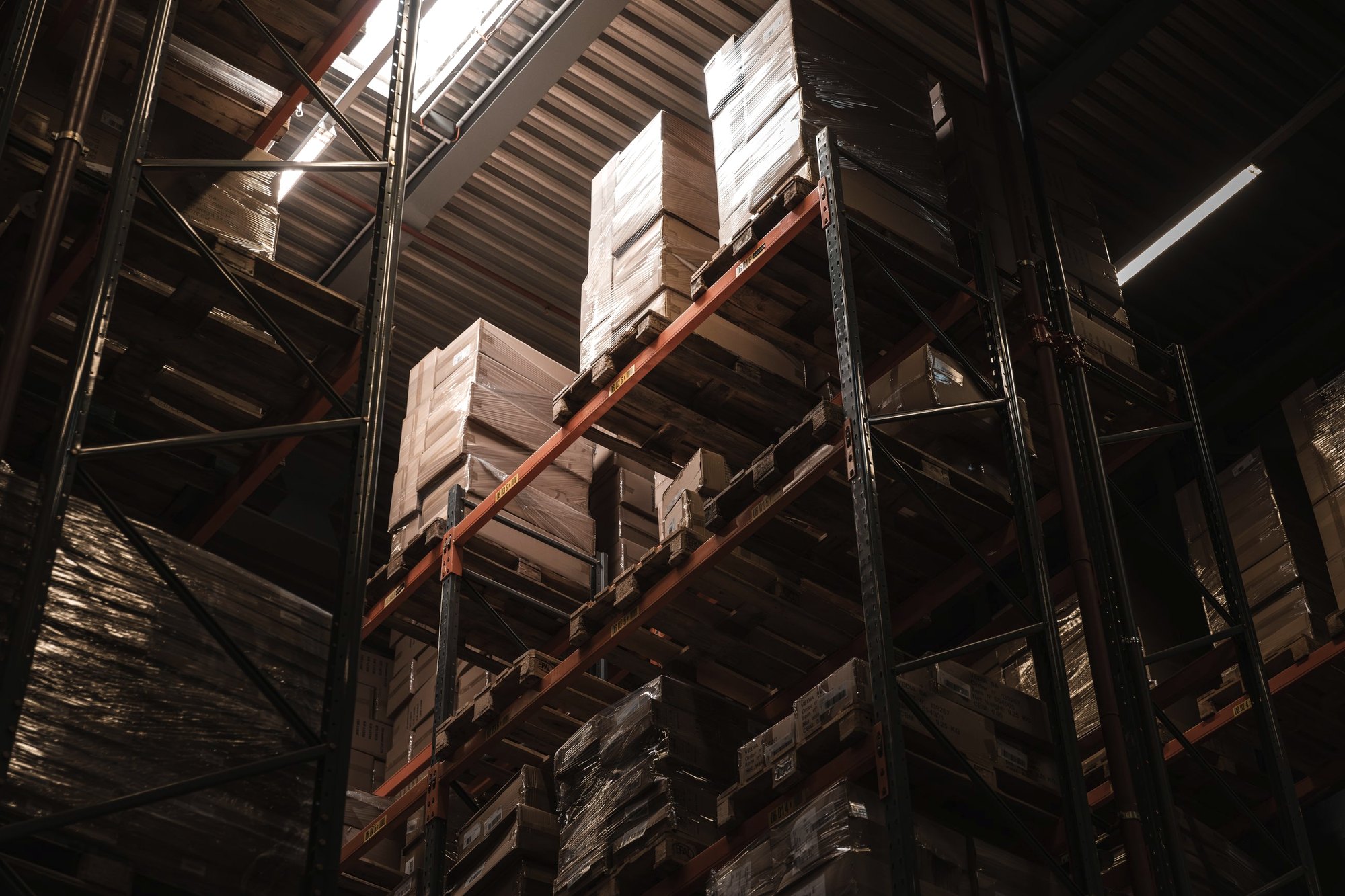
A serious product incident rarely remains one legal problem.
An electrical appliance may first appear to present a warranty issue. If the same defect causes a fire, the manufacturer or importer may face a compensation claim. If the defect is found across an identifiable production series, sales may need to stop and products already in circulation may have to be withdrawn or recalled. If the product is sold online, the listing itself can become the subject of regulatory action.
Those matters arise from the same product, but they are governed by different legal questions.
For a business placing products on the Turkish market, it is useful to separate at least four issues:
- whether the product may lawfully be placed and kept on the market;
- what must be done if non-compliance or a safety risk is discovered;
- who must compensate injury or property damage already caused; and
- what contractual or consumer remedies exist independently of the regulatory regime.
The principal framework is Law No. 7223 on Product Safety and Technical Regulations, which entered into force on 12 March 2021. It is supplemented by implementing regulations and, crucially, by the technical legislation applicable to the particular product concerned. The Ministry of Trade's current product-safety framework page identifies the General Product Safety Regulation, the Market Surveillance and Inspection Framework Regulation, CE-marking rules and the dedicated distance-sales product-safety regulation among the principal instruments implementing Law No. 7223.
The sector-specific layer should not be underestimated. Machinery, electrical equipment, toys, cosmetics, medical devices, motor vehicles and many other product categories are subject to their own rules and, in some cases, different competent authorities.
Law No. 7223 provides the architecture.
The legal analysis still has to begin with the particular product.
1. Compliance, safety and compensation are separate questions
Article 4 of Law No. 7223 requires products to comply with the applicable technical regulation. A non-compliant product may not be placed or kept on the market before the non-compliance has been remedied.
Article 5 adds the distinct requirement that the product be safe. Where the relevant technical regulation contains health and safety requirements, compliance gives rise to a presumption of safety unless the contrary is established.
The General Product Safety Regulation performs a residual role. It applies where no relevant technical regulation exists, or where the applicable technical regulation does not address health and safety or the particular risk or category of risk in question. It should therefore not be treated as though it replaces sector-specific technical rules.
Compensation for harm is a third issue.
Article 6 provides that where a product causes injury to a person or damage to property, the manufacturer or importer must compensate the damage if the statutory conditions are established. The claimant must prove the damage and the causal connection between the product's non-compliance and that damage. Where several manufacturers or importers are responsible, liability is joint and several.
The distinction matters.
A product can be contractually defective without creating a personal-injury claim.
A product can trigger regulatory action before anybody has suffered compensable loss.
And the fact that a consumer obtained a replacement product does not answer whether a separate fire, bodily injury or property-damage claim exists.
The same incident can therefore engage several regimes without those regimes becoming interchangeable.
2. A CE mark is not regulatory immunity
Businesses sometimes place too much weight on a conformity mark or certificate.
Law No. 7223 expressly prevents that conclusion.
Where the applicable technical rules require conformity assessment, those procedures must be completed before the product is placed on the market. Required conformity markings and documents must be genuine and properly used.
But Article 15(6) is equally clear: the existence of documents or markings indicating conformity does not prevent the competent authority from inspecting the product, taking statutory measures against a non-compliant product or imposing the applicable sanction.
The same principle appears in the General Product Safety Regulation. Even conformity with relevant standards does not prevent regulatory action where there is sufficient reason to conclude that the product is dangerous.
That has practical importance.
A CE-marked product may still present a defect caused by production variation, a component change, incorrect assembly, inadequate warnings or another problem that was not identified in the original conformity assessment.
Compliance documentation is therefore essential evidence.
It is not a defence to every later product-safety concern.
3. Product-liability compensation under Article 6 has its own test
Article 6 is the central compensation provision under Law No. 7223.
The manufacturer or importer can be liable where a product causes injury or property damage. The claimant must prove both the loss and the causal relationship between the product's non-compliance and the loss. Material and non-material damages are quantified under the Turkish Code of Obligations. Other statutory bases of liability remain preserved.
The provision also contains two rules with considerable commercial importance.
First, contractual clauses purporting to eliminate or reduce the manufacturer's or importer's statutory product-liability compensation are ineffective to the extent provided by Article 6.
Second, the statutory limitation period is three years from the date the injured person learns of the damage and the person liable to compensate it, and in any event ten years from the date on which the damage occurred.
The statute does not, however, impose liability in a factual vacuum.
Article 21 identifies circumstances capable of relieving a manufacturer or importer from liability. These include proof that the product was not placed on the market by that operator; that the non-compliance resulted from intervention by the distributor, a third party or the user; or that the non-compliance arose from manufacture in accordance with mandatory technical rules. Where one of those statutory grounds is established, the Article 6 compensation liability falls away.
The treatment of third-party and claimant fault is also unusually specific.
If the damage resulted from both product non-compliance and the act or omission of a third party, the manufacturer's or importer's liability under Article 6 is not reduced on that ground, although a right of recourse against the third party remains.
By contrast, where the injured person's own fault, or the fault of a person for whom the injured person is responsible, contributed to the damage together with the product non-compliance, compensation may be reduced or eliminated according to the circumstances.
That distinction deserves attention in serious claims. It affects both defence strategy and subsequent contribution or recourse.
4. The statutory role matters more than the commercial label
Law No. 7223 assigns different duties to manufacturers, authorised representatives, importers and distributors.
Those classifications should be determined from what the company actually does rather than from what the supply agreement happens to call it.
The manufacturer has responsibility for placing compliant products on the market, preparing technical documentation where required, completing conformity assessment, applying required markings, maintaining conformity in serial production and retaining relevant records. Where no different retention period is prescribed, conformity documentation and the technical file must generally be kept for at least ten years from market placement. Manufacturers must also monitor products in circulation proportionately to risk and maintain records of complaints, non-compliant products and recalls.
The importer has independent responsibilities. Before placing a product on the Turkish market, it must verify matters including required conformity markings, accompanying documentation and specified manufacturer obligations. An importer that knows, or ought to know, that the product is non-compliant may not simply proceed and leave the problem to the foreign manufacturer.
Distributors likewise have statutory duties. Before making a product available, they must verify prescribed markings and conformity documents and, where applicable, Turkish instructions and safety information. If they know or should know that a product in circulation is non-compliant, they must verify that appropriate corrective action is being taken.
In a product incident, it is therefore rarely enough to ask who physically manufactured the item.
The legally relevant question is which statutory role each participant assumed in bringing that product to the market.
5. Private-label sellers can become manufacturers, and distributors can inherit liability by silence
Article 11 contains some of the most commercially significant provisions in the statute.
An importer or distributor that places a product on the market under its own name or trademark, or modifies an existing product in a way capable of affecting compliance, is treated as a manufacturer for the purposes of the relevant manufacturer obligations and product-liability regime.
That rule is particularly important in private-label arrangements.
A Turkish business may purchase a product from an overseas factory, redesign the packaging and place only its own brand on the product. Commercially it may describe the overseas factory as "the manufacturer".
That description does not necessarily determine the statutory position in Türkiye.
Article 11 goes further.
Where the relevant manufacturer, authorised representative or importer cannot be identified, a distributor that fails to provide the injured person with the required identity and contact details (or, if unavailable, the details of the preceding economic operator in the supply chain) within ten business days of receiving the request can itself be treated as liable for compensation as though it were the manufacturer.
This is a powerful compliance rule because it turns traceability failure into potential substantive liability.
The distributor that cannot identify where the product came from may cease to be merely the middle of the chain.
6. Traceability should be designed for the day something goes wrong
Article 12 requires economic operators to maintain records identifying the preceding and, where relevant, subsequent operator in the supply chain, together with information facilitating product identification.
Those records must generally be retained for at least ten years from the date the product is placed or begins to be made available on the market and must be produced to the competent authority on request.
The obligation also extends expressly to businesses placing products on the market electronically and to intermediary service providers that supply the e-commerce environment.
The regulatory rationale is obvious.
The commercial consequence is sometimes less obvious.
Suppose a component defect affects one manufacturing lot.
If the manufacturer can identify the relevant lot, the importer can identify the shipments and distributors can identify the relevant customers, corrective action may be confined to an identifiable population.
If the chain cannot determine which products contain the component, a narrow defect can become a much larger withdrawal or recall.
Lot numbers, serial numbers, shipment records and customer information therefore have a direct relationship with recall economics.
Traceability is not only an inspection obligation.
It determines how precisely a business can react.
7. Market surveillance can continue after every certificate has been issued
The competent authority's powers under Law No. 7223 are extensive.
Products may be inspected from market placement through to the stage at which they reach the final user and, where the relevant technical regime permits, during import, export, installation, commissioning or use.
Authorities may inspect warehouses, transport vehicles, workplaces and manufacturing facilities; request information and records; examine markings and documentation; take samples; commission testing; and undertake risk assessment.
Where there is sufficient reason to believe a product presents a risk, the authority evaluates both the probability of the hazard materialising and the seriousness of the potential harm.
The absence or inadequacy of required conformity markings, technical files, labels or instructions may itself provide grounds for a risk assessment and corrective measures.
Depending on the circumstances, the corrective ladder can include:
- remedying the non-compliance;
- adding or correcting warnings;
- temporary suspension;
- preventing further market availability;
- withdrawal from the supply chain;
- recall from final users;
- destruction or rendering the product unusable; and
- regulatory publication of the action taken.
Serious-risk cases can justify immediate measures.
In other cases, the statute generally gives the operator an opportunity to respond before the authority reaches its final decision.
The response to a regulator should therefore be handled as a technical and legal exercise together.
8. Withdrawal and recall are different measures
The terminology matters because the operational burden is very different.
Withdrawal is directed at stopping a product within the supply chain from continuing to be made available.
Recall concerns products that have already reached final users and seeks to bring those products back. Law No. 7223 defines recall expressly in that way.
Article 19 treats recall as a measure used where other measures are insufficient to eliminate the risk.
A recall may be initiated voluntarily by the economic operator or required by the competent authority.
The public communication must identify the affected product, explain the problem and provide the relevant return or repair arrangements. The final user returning the product must be offered at least one of the statutory alternatives:
- remedy of the problem that caused the recall;
- payment of the product's retail value at the date of delivery; or
- replacement with a safe, equivalent and technically compliant product.
Recall costs are borne by the operator carrying it out, and the process may not impose additional cost on the final user.
A recall notice should consequently not be drafted by marketing alone.
It is a safety communication, regulatory document and potential litigation exhibit at the same time.
It needs to be sufficiently clear to protect users without making factual assertions about technical causation that the company cannot yet support.
9. Voluntary corrective action can materially change regulatory exposure
One of the most important provisions in the statute is also one of the easiest to overlook.
Under Article 21(1), an economic operator that identifies non-compliance before receiving a request or warning from the competent authority, voluntarily takes the measures required to eliminate the non-compliance and risk (including recall where necessary) and completely remedies the non-compliance is not subject to the administrative sanctions provided by Law No. 7223.
The conditions should be read carefully.
The rule is not a general amnesty for companies that cooperate after enforcement has begun.
Nor does it mean that taking corrective action automatically eliminates compensation claims already arising from damage.
It is a statutory consequence tied to voluntary correction before authority intervention and complete elimination of the non-compliance.
The business significance is considerable.
A company that detects a genuine product problem has to assess quickly whether the issue can be contained voluntarily, whether notification is required, what population is affected and what corrective measure is proportionate.
Delay can alter the regulatory position.
That does not mean every complaint should trigger an immediate recall.
It does mean that a credible indication of systemic non-compliance should not sit for weeks between quality assurance, customer service and management while nobody owns the regulatory decision.
10. Online sales have their own enforcement architecture
Türkiye introduced a dedicated regime for products offered through distance-communication channels with the Regulation on Market Surveillance and Inspection of Products Offered Through Means of Distance Communication, published on 30 October 2024 and effective from 1 April 2025.
The regulation operates alongside Law No. 7223 rather than replacing it.
Among its principal effects, online product listings must display the relevant prescribed product information, including applicable Turkish warnings, safety information and conformity markings.
Intermediary platforms must designate a Product Safety Contact Point for communications with authorities and users.
For specified categories of products, a product offered to Turkish final users must also have an economic operator established in Türkiye.
The 24-hour rule is particularly important.
Where a competent authority identifies a non-compliant product being advertised or sold online and issues the prescribed notification, the relevant content must be removed within 24 hours. If it is not, access to the relevant content may be blocked. This mechanism already appears in Article 17 of Law No. 7223 and is reinforced by the distance-sales regime.
Law No. 7223 also permits authorities to make online or other distance purchases without disclosing their identity and use the purchased products as inspection samples.
For platforms, the important distinction is functional.
Providing an electronic marketplace does not necessarily make the platform the manufacturer or importer.
But where the same business also imports goods, holds inventory, acts as fulfilment provider, places its own brand on products or otherwise assumes the statutory role of an economic operator, the legal analysis changes accordingly.
The corporate group's commercial description of the business model is not decisive.
The actual activity is.
11. Consumer warranty rights and product liability should remain separate
Law No. 6502 on Consumer Protection provides consumers with remedies where goods are defective, including rescission, price reduction, free repair and replacement with conforming goods.
Those remedies concern the defective performance of the sale and the consumer's rights in relation to the goods. They are not the same as Article 6 liability for injury or property damage caused by a non-compliant product, and they are not the same as a regulatory recall.
This distinction becomes critical where a safety problem affects a large product population.
A business cannot necessarily manage a systemic safety defect as a sequence of isolated warranty tickets.
If 20 consumers have complained but 25,000 units containing the same dangerous component remain in circulation, resolving the 20 individual claims may leave the regulatory problem untouched.
The opposite is also true.
A product returned because of an ordinary quality defect does not automatically create a regulatory recall issue.
The technical facts determine which regime is engaged.
12. Contracts allocate cost within the chain; they do not rewrite mandatory liability
Manufacturing, supply and distribution agreements remain extremely important.
A properly structured agreement should address matters such as:
- responsibility for technical documentation and conformity assessment;
- product specifications and change control;
- testing and quality assurance;
- labels, markings and Turkish instructions;
- complaint escalation;
- traceability;
- regulator communications;
- the authority to suspend sales;
- withdrawal and recall decision-making;
- recall expenses;
- product-liability and recall insurance;
- defence of third-party claims; and
- indemnity and recourse between supply-chain participants.
Those provisions can determine which commercial party ultimately bears a large part of the economic consequence of an incident.
They cannot make mandatory third-party rights disappear.
Article 6 expressly renders ineffective contractual terms purporting to eliminate or reduce the manufacturer or importer's statutory compensation liability in the prohibited manner.
The correct drafting objective is therefore not to "contract out" of Turkish product law.
It is to decide, so far as the law permits, how exposure will be allocated after the statutory claimant or regulator has exercised its rights.
13. The first serious incident should trigger one controlled factual record
A product crisis becomes harder to manage when technical, legal, insurance and customer-service teams operate from different versions of the facts.
The first priority after a serious incident should usually be preservation.
The physical product involved may need to be secured. Photographs, firmware or software versions, batch and serial numbers, testing data, production records and complaints should be preserved. Relevant stock may need to be quarantined while the affected population is identified.
At the same time, the company needs to determine:
- what technical regulation governs the product;
- which statutory role each group company or counterparty occupies;
- whether similar incidents exist;
- whether distribution should be suspended;
- whether the competent authority must be engaged;
- whether voluntary corrective action remains available;
- whether insurers need immediate notification; and
- what communications can safely and accurately be made to customers and distributors.
The technical team should determine what happened.
The legal team should determine what consequences follow from that finding.
Neither exercise works well without the other.
For an international manufacturer, a further question arises: whether the same product or component is in circulation in other jurisdictions.
One engineering problem can become several regulatory matters very quickly.
Conclusion
Turkish product law is best understood as a lifecycle rather than as a damages regime that begins only after somebody is injured.
Before market entry, the business has to determine the technical rules applicable to the product, complete any required conformity assessment and maintain the appropriate documentation.
While the product is in circulation, manufacturers, importers and distributors have continuing duties concerning conformity, complaints, warnings, traceability and corrective action.
When non-compliance emerges, Law No. 7223 provides a graduated framework ranging from correction and warnings to suspension, withdrawal and recall. A company that acts voluntarily before authority intervention and completely eliminates the non-compliance may also obtain the specific administrative-sanction protection in Article 21.
Where damage has already occurred, Article 6 creates a separate compensation regime requiring proof of damage and causation between non-compliance and the loss, while preserving other bases of liability.
And since April 2025, online distribution has operated within an additional enforcement framework addressing listings, platform cooperation, Product Safety Contact Points and, for specified categories, the presence of a Turkish economic operator.
For businesses, the most important distinction is therefore not simply between a "safe" and "unsafe" product.
It is between a company that can identify and control a product problem while it is still manageable and one that begins reconstructing its supply chain only after the regulator, customer or insurer has already done so.
How Terziolu & Partners Can Assist
Terziolu & Partners advises manufacturers, importers, distributors, retailers, insurers, online businesses and international groups on product-related regulatory and dispute matters involving Türkiye. Our work may include product-market-entry and compliance analysis; identification of manufacturer, importer and distributor responsibilities; supply and distribution arrangements; traceability and record structures; regulatory enquiries and market-surveillance proceedings; corrective-action, withdrawal and recall strategy; online-sales compliance; product-liability claims; insurance and subrogation; recourse between supply-chain participants; and coordination of multi-jurisdiction product incidents, drawing on our regulatory and compliance, insurance and dispute resolution practices.
Where a safety incident has already occurred, regulatory response, evidence preservation, insurance and potential litigation should ordinarily be coordinated from the outset. The legal position is easiest to protect while the facts are still being created.
Discuss a product-safety, recall or product-liability matter with our team.
Selected authorities
Primary legislation
Law No. 7223 on Product Safety and Technical Regulations, published in the Official Gazette on 12 March 2020 and effective from 12 March 2021, particularly Articles 4 to 12 and 15 to 23 (official Ministry of Trade text).
General product safety
General Product Safety Regulation, Official Gazette No. 31420 dated 11 March 2021, effective 12 March 2021. The Regulation governs general product-safety requirements where no applicable technical regulation exists or the existing technical regulation does not address the relevant health, safety or risk issue.
Market surveillance and conformity
Product Safety Framework Legislation, Republic of Türkiye Ministry of Trade, current framework page (accessed September 2026). The Ministry lists Law No. 7223 together with the General Product Safety Regulation, the Market Surveillance and Inspection Framework Regulation, the CE Mark Regulation and the other principal implementing instruments.
Online and distance sales
Regulation on Market Surveillance and Inspection of Products Offered Through Means of Distance Communication, Official Gazette No. 32707 dated 30 October 2024, effective 1 April 2025.
Ministry of Trade, Regulation Implementation Guide, updated 16 May 2025, providing official implementation guidance for the distance-sales product-safety regime.
Consumer protection
Law No. 6502 on Consumer Protection, particularly the provisions concerning defective goods and consumer remedies (official Ministry of Trade publication).
Unsafe product publication
GÜBİS / Güvensiz Ürün Portalı, Republic of Türkiye Ministry of Trade, publishing products officially determined to be unsafe together with the identified risk and the measure imposed. Official entries demonstrate measures including prohibition on market placement and withdrawal.
Related Insights
- Insurance
Insurance Subrogation and Recovery in Türkiye: Preserving the Claim Behind the Payment
Payment of an insurance claim may transfer an existing third-party claim to the insurer, but it does not improve that claim. An insurer can pay a perfectly valid policy claim and still find recovery restricted by a liability cap, an expired limitation period, an arbitration agreement, missing evidence or a release the insured already gave. This briefing examines statutory subrogation under Articles 1472 and 1481 of the Turkish Commercial Code, preservation of recovery rights during adjustment, limitation and jurisdiction, partial indemnification, contractual risk allocation, multi-party losses and cross-border enforcement.
- Regulatory & Compliance
Regulatory Enquiries and Dawn Raid Readiness in Türkiye: Legal Guide for Companies
Regulatory pressure is not managed only when a formal investigation begins. Companies should be prepared for information requests, on-site inspections, data breach notifications, sectoral enquiries, internal investigations, document preservation, dawn raid response, board reporting and enforcement strategy before a regulator arrives.
- International Business & Investment
Commercial Agency and Distribution Agreements in Türkiye: Legal Guide for International Businesses
Commercial agency and distribution agreements are often the first legal structure behind market entry into Türkiye. Foreign suppliers, Turkish manufacturers, brands, distributors and agents should address exclusivity, territory, commissions, targets, termination, goodwill indemnity, competition, IP, payment risk and dispute resolution before commercial trust turns into legal exposure.
- Insurance
Insurance Disputes: Claims, Compensation and Arbitration
Insurance disputes are not resolved by reading the policy alone. The nature of the loss, the scope of cover, exclusions, the loss adjuster's report, the supporting evidence, the prospect of subrogation and the choice between arbitration and litigation must all be weighed together.