Ship Arrest, Maritime Liens and Security in Türkiye: Securing a Maritime Claim Before the Vessel Leaves
A maritime creditor can succeed on every substantive point and still recover nothing if the vessel has already sailed. Ship arrest is the specialised security remedy that preserves the practical value of a maritime claim while an arrestable asset remains within reach. This briefing explains maritime claims and liens, which ship may be arrested, sister-ship and associated-ship questions, applicant security, release against P&I security, wrongful-arrest risk, priority and cross-border enforcement under Turkish law.
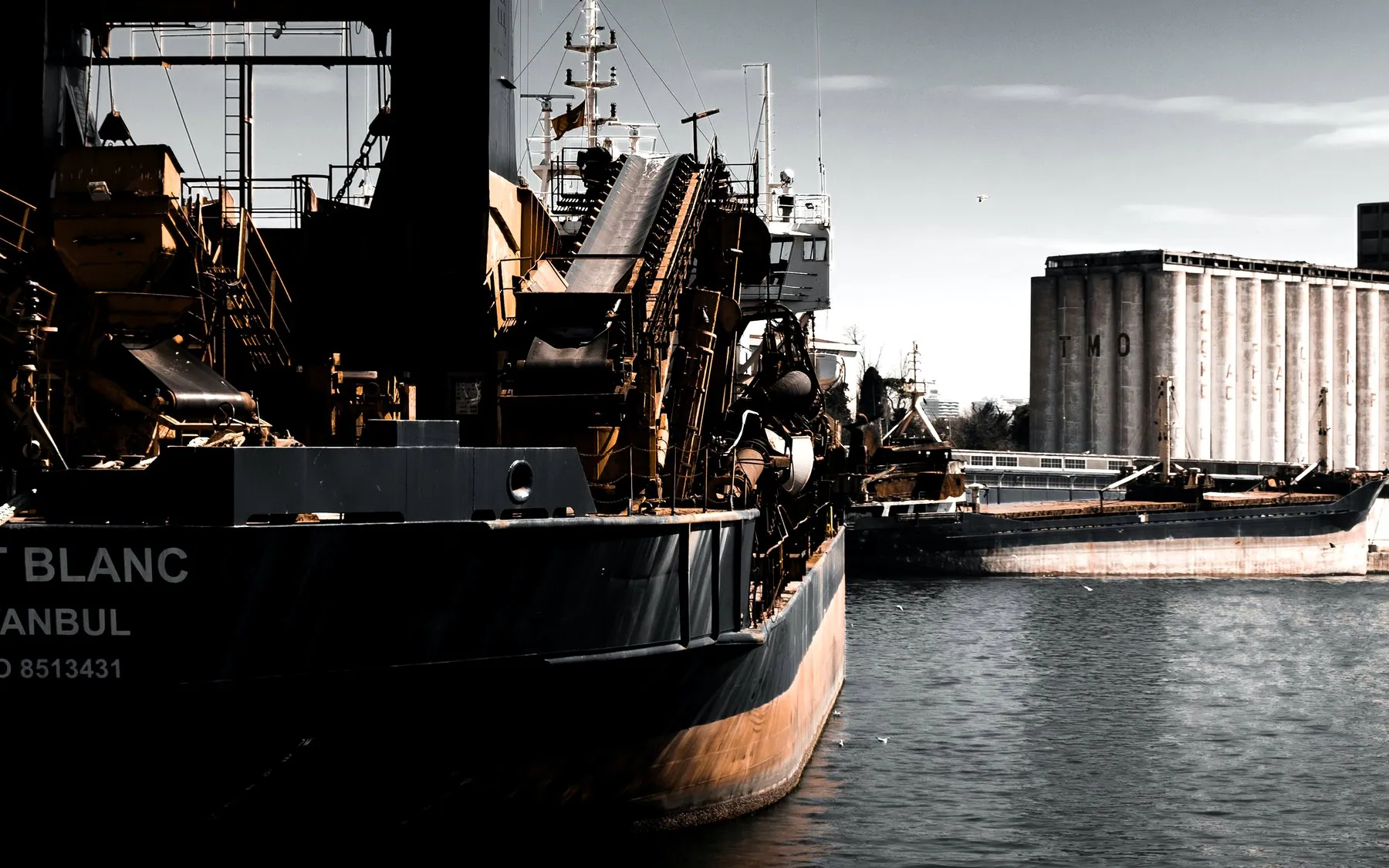
A maritime creditor can succeed on every substantive point and still face a poor recovery.
That risk is inherent in shipping. The principal asset may be a vessel that remains in Türkiye for only a matter of hours or days. Its registered owner may be a single-ship company. The contractual debtor, technical manager and commercial operator may be different entities. The underlying contract may be governed by English law, provide for London arbitration and involve insurers or P&I interests located elsewhere.
Against that background, the arrest of a vessel is not simply an aggressive form of debt collection. It is a specialised security remedy intended to preserve the practical value of a maritime claim while an arrestable asset remains within reach.
Turkish law contains a detailed regime for ship arrest, principally under Articles 1352 to 1376 of the Turkish Commercial Code No. 6102 (the "TCC"). Türkiye is also a party to the International Convention on Arrest of Ships, 1999, which entered into force for Türkiye on 11 December 2019.
The statutory framework is exacting. Before an arrest is sought, the claimant must identify the nature of the maritime claim, the person responsible for it, the ownership of the vessel, the relationship between the claim and the vessel, the competent court and the security required from the applicant. Once an arrest order is made, the procedure moves quickly.
The arrest should therefore be approached as part of the recovery strategy from the beginning of the dispute, rather than as an interim application considered only after proceedings on the merits have commenced. It assumes familiarity with the wider landscape of maritime and shipping disputes in Türkiye and concentrates on the arrest remedy itself.
1. The Statutory Gateway: The Claim Must Be a Maritime Claim
Article 1352 TCC defines the claims that qualify as maritime claims for the purposes of the ship-arrest regime.
The statutory categories are extensive. They include claims arising from loss or damage caused by the operation of a ship; death or personal injury connected with ship operations; salvage; environmental damage; wreck removal; contracts concerning the use or hire of a vessel; carriage of goods or passengers; loss of or damage to cargo; general average; towage; pilotage; supplies and services provided for the operation, management, preservation or maintenance of the vessel; shipbuilding and repair; port and waterway charges; crew claims; certain disbursements; insurance premiums; commissions and agency fees; ownership and possession disputes; mortgages and similar proprietary security; and contracts for the sale of ships.
The importance of the classification becomes apparent when Article 1352 is read with Article 1353.
Article 1353 establishes a special regime. A maritime claim may be secured through the provisional arrest of the vessel. The same result cannot ordinarily be achieved by seeking an interim injunction or another order merely preventing the vessel from sailing. Conversely, a claim falling outside Article 1352 cannot support a provisional ship arrest under these provisions.
The result is that the court is not dealing with a general question of whether the claimant appears to be owed money. It must first be satisfied that the alleged debt falls within the statutory maritime-claim regime.
For straightforward claims this may be readily established. In other matters, particularly bunker supplies, chartering arrangements, ship-management structures or transactions involving several contracting entities, classification deserves closer attention.
Article 1353 also addresses maritime claims that have not yet matured. In those circumstances, arrest may still be available where the requirements referred to in Article 257(2) of the Enforcement and Bankruptcy Law are satisfied.
The statutory characterisation should therefore be settled before the vessel arrives, where that is possible, rather than being formulated in haste after its Turkish port call has begun.
2. A Maritime Claim Is Not Necessarily a Maritime Lien
The distinction between a maritime claim and a maritime lien is fundamental.
Article 1352 defines the considerably broader universe of claims capable of supporting arrest. Article 1320 deals with the narrower category of claims giving rise to a gemi alacaklısı hakkı, a maritime lien under Turkish law.
Article 1320 includes, subject to its statutory qualifications, claims for crew wages and related entitlements; death or personal injury directly connected with the operation of the vessel; salvage remuneration; specified port, canal, waterway, quarantine and pilotage dues; certain tort claims caused by the operation of the vessel; and general-average contribution claims.
The distinction affects much more than terminology.
A bunker supplier may have a maritime claim under Article 1352 capable of supporting arrest without having a maritime lien under Article 1320. A repair or shipyard claim may present the same distinction.
That becomes important where ownership has changed, where several creditors are pursuing the same vessel or where the vessel is ultimately sold through compulsory enforcement.
Arrest provides security. A maritime lien concerns the juridical quality and priority of the claimant's right against the vessel. The two questions must not be collapsed into one.
The TCC's maritime-lien regime was heavily influenced by the International Convention on Maritime Liens and Mortgages, 1993, and the legislative history confirms that the relevant provisions of the Commercial Code drew upon the international convention framework.
There is, however, an important qualification. Türkiye has not completed accession to the 1993 Convention and is not listed among its current parties by the United Nations depositary record. Accordingly, the domestic provisions should not be presented as though the 1993 Convention itself were presently binding on Türkiye merely because it served as an important legislative source.
3. Which Ship May Be Arrested?
The existence of a maritime claim does not create a general right to arrest any vessel commercially associated with the debtor.
Article 1369 TCC governs the ships against which the arrest remedy may be exercised.
In relation to the vessel on which the maritime claim arose, the provision distinguishes a number of circumstances. These include cases in which the person who owned the vessel when the maritime claim arose remains personally liable and remains the owner when arrest is implemented; corresponding circumstances involving the relevant charterer; claims secured by a ship mortgage or comparable proprietary right; disputes concerning ownership or possession of the vessel; and claims carrying a maritime lien under Article 1320.
The identity of the registered owner therefore matters greatly.
International shipping structures frequently separate ownership, operation and management. A vessel may be registered in the name of one company, commercially operated by another, technically managed by a third and employed under a charter entered into by a fourth. The name under which a fleet trades does not resolve the arrest analysis.
Before proceedings are commenced, current registry information should be obtained and considered alongside the contractual chain and the identity of the party legally liable for the maritime claim.
Historic ownership information may also matter. A claimant relying on an assumption made when the contract was signed can find that the asset position has changed by the time arrest is sought.
4. Sister-Ship Arrest
Article 1369 also permits arrest of another vessel in defined circumstances.
Where the statutory conditions are met, another vessel owned at the time of arrest by the person responsible for the maritime claim may become available as security. The relevant provision looks, among other things, at the status of that person when the maritime claim arose.
This can be significant where the vessel involved in the underlying transaction has already left Türkiye or is unlikely to call at a useful jurisdiction.
It does not mean, however, that every vessel within the same corporate group is a sister ship for arrest purposes. Common shareholders, directors, managers, branding or commercial control are not the same as common legal ownership.
This distinction is particularly important in an industry in which individual vessels are often held through separate single-purpose companies.
5. Associated Ships and the Corporate Veil
The position becomes more difficult where the creditor seeks to reach a vessel belonging to another company within the same wider corporate structure.
Article 1369 does not establish a straightforward statutory associated-ship regime. Whether exceptional circumstances might permit the court to look beyond formal corporate ownership and apply principles associated with lifting the corporate veil is a separate and much more fact-sensitive question, closer in character to the analysis used in cross-border fraud, asset-tracing and freezing strategy than to the ordinary sister-ship rule.
The issue has been examined in detail in Turkish scholarship, including analysis of Article 1369 in light of Article 3(2) of the 1999 Arrest Convention and whether veil-piercing principles may have a role in single-ship corporate structures.
The important point for practice is that this is a distinct legal argument whose viability will depend upon the corporate facts and the applicable principles of Turkish law.
6. The Vessel's Location and Turkish Jurisdiction
Ship arrest is necessarily territorial.
Article 1350 TCC provides that the provisional or enforcement arrest of a vessel, its compulsory sale and the consequences of that sale are governed by the law of the country in which the vessel is situated when the relevant enforcement measures take place.
The rules on the competent Turkish court are correspondingly specific.
For Turkish-flagged vessels, Article 1354 provides several jurisdictional bases, including the place where the vessel is anchored, moored, berthed or on a slipway, and in appropriate circumstances the place of registry or the relevant owner's or charterer's residence.
For foreign-flagged vessels, Article 1355 is narrower. The arrest decision may be given by the court of the place in Türkiye where the vessel is anchored, attached to a buoy or mooring, berthed or placed on a slipway.
For a practitioner, the consequence is practical. The vessel's IMO number, flag, current registry, present ownership, ETA, berth and expected departure are not merely logistical details. They may determine where proceedings can be commenced and whether an order can still be made and enforced in time.
Where a port call is known in advance, legal preparation should ideally be substantially complete before arrival.
7. Foreign Arbitration and Turkish Ship Arrest
International shipping contracts frequently contain foreign governing-law and arbitration clauses. Charterparties may provide for English law and London arbitration. Ship sale, financing, construction and service agreements may point to other foreign courts or tribunals.
Article 1356 TCC expressly recognises that this does not necessarily prevent a Turkish court from ordering arrest. Even where the merits are subject to a foreign court or arbitral tribunal, or the maritime claim is governed by foreign law, the Turkish courts identified under Articles 1354 and 1355 retain jurisdiction to order arrest for the purpose of obtaining security. Article 1357 preserves the relevant Turkish arrest jurisdiction where the merits are already pending before arbitrators or a foreign court.
This separation between the merits forum and the security forum is commercially important, and it is the everyday work of a dispute practice that handles interim measures and enforcement. A claimant may pursue London arbitration while taking advantage of the vessel's temporary presence in Türkiye to secure the claim.
The two proceedings nevertheless need to be coordinated. The claimant identified in the arrest proceedings, the amount secured, the underlying causes of action and any subsequent security instrument should correspond to the case being pursued on the merits.
An arrest strategy designed without reference to the arbitration can create difficulties later, particularly when the vessel is released and the substitute security becomes the principal asset against which any eventual award will be enforced through the recognition and enforcement of foreign judgments and arbitral awards in Türkiye.
8. Evidence and Applicant Security
The provisional character of an arrest application does not remove the need for evidence.
Article 1362 requires the creditor to produce evidence sufficient to satisfy the court that the claim falls within Article 1352 and as to its monetary amount. What is required will depend upon the claim.
A charterparty matter may require the fixture recap or charterparty, notices, hire or freight statements, laytime calculations and correspondence. A bunker claim may require the purchase chain, nomination or confirmation documents, bunker delivery notes, invoices and evidence establishing the identity of the party liable for the debt. A cargo claim may involve the bill of lading, surveys, delivery documents, reservations and notices of loss, and frequently proceeds as a subrogated insurance dispute. A repair or shipyard claim may require the underlying work order, specifications, quotations, records of completion and invoices. Separate evidence will commonly be needed to establish the vessel's identity and current ownership.
The arresting party must also address counter-security. Article 1363 provides that a claimant seeking an arrest for a maritime claim must ordinarily furnish security of 10,000 Special Drawing Rights (SDR).
The court may increase the amount. In doing so, the statute expressly directs attention to the vessel's daily operating expenses and earnings lost while the vessel remains prevented from sailing. The claimant may also request a reduction, and crew creditors falling within Article 1320(1)(a) are exempt from the security requirement.
That allocation of risk is important. Arresting an operating commercial vessel can produce significant losses quickly. A claimant contemplating arrest should therefore assess not only whether the statutory requirements can be met, but the financial consequences if the application later proves unsustainable.
9. Execution of the Arrest Order
The procedural timetable after an arrest order is unusually important.
Under Article 1364, the creditor must request execution of the arrest decision within three business days from the date of the decision. If the creditor fails to do so, the arrest decision automatically ceases to have effect.
Article 1365 requires the enforcement office to implement the arrest immediately upon application and expressly permits arrest to be carried out during periods that would ordinarily count as night time or public holidays for enforcement purposes.
Article 1366 goes further into the mechanics of detention. Regardless of flag or registry, the enforcement officer places the arrested vessel under custody and prevents it from sailing, with the required notifications being made to the captain, owner, operator or representative as appropriate.
This means that a well-prepared application should already have an execution plan behind it. The competent enforcement office, the vessel's position, the documents needed for execution and the relevant operational contacts should not first be identified after the court has made its decision.
The statutory clock continues beyond execution as well. Article 1376 modifies the periods under Article 264 of the Enforcement and Bankruptcy Law for proceedings required to complete the provisional arrest, providing a one-month period in ship-arrest matters.
For a substantial claim, the arrest, its execution and the proceedings required to maintain it should therefore be treated as a single procedural sequence rather than three separate instructions.
10. Release of the Vessel and Substitute Security
An arrested vessel does not ordinarily need to remain detained until the merits have been finally resolved.
Articles 1370 to 1374 provide the framework through which the vessel may be released or the arrest lifted against security. Under Article 1370, the vessel may in specified circumstances be left with the debtor or third-party possessor while the arrest remains effective, provided the necessary value or acceptable security is furnished. Article 1371 allows the owner or debtor to seek the lifting of the arrest by providing sufficient security for the maritime claim, interest and costs, subject to the statutory limitation related to the value of the vessel.
Article 1372 allows the parties themselves to agree upon the form and amount of security. Article 1373 then makes clear that providing security for the vessel's release is not to be interpreted as an admission of liability or waiver of objections, defences or rights to limit liability.
The legislative reasoning to Article 1372 is particularly instructive. The parliamentary materials expressly refer to the practice of P&I clubs providing this form of security by letter of undertaking and recognise that many maritime creditors accept such security. That does not make every P&I letter automatically acceptable. The terms matter, and their acceptability turns on the marine insurance and P&I issues the creditor should evaluate before agreeing to release.
Once the vessel has sailed, the substitute security may be more important to the claimant than the vessel itself. Depending upon the dispute, careful attention should be given to the secured amount, interest, legal costs, currency, duration, expiry, governing law, jurisdiction, reduction provisions, identity of the beneficiary, proceedings covered and circumstances in which payment may be demanded. Many of the same drafting concerns arise with the demand guarantees and letters of undertaking used as substitute security.
A hurriedly negotiated security instrument can preserve the vessel owner's commercial position while unnecessarily weakening the creditor's recovery position. The release phase should therefore receive the same level of legal attention as the arrest itself.
11. Re-Arrest and Additional Security
Turkish law also restricts repeated arrest for the same maritime claim.
Article 1375 establishes the general position that, once a vessel has been arrested and released or security has already been obtained, repeated arrest for the same claim is available only in the circumstances specified in the provision. Those exceptions include situations in which the earlier security is insufficient, the person providing it fails or becomes unable to perform the relevant obligation, or the earlier release occurred in circumstances recognised by the statute. The provision also regulates circumstances in which another arrestable vessel may be pursued for the same maritime claim.
This matters when substitute security is being negotiated. A claimant deciding to release an arrest should understand not only whether the security looks adequate on the day it is offered, but what remedies will remain if that security later proves defective or ineffective.
12. Wrongful Arrest
Ship arrest inevitably carries a corresponding risk where the remedy has been pursued unsuccessfully.
Article 1361 addresses claims for damages against an arresting creditor who ultimately proves unsuccessful. It gives jurisdiction over the damages action to the court that ordered the arrest and provides that, where the merits are pending before a domestic or foreign court or arbitral tribunal, the determination of those proceedings constitutes a preliminary issue for the damages action.
It is important not to overstate what Article 1361 itself does. The provision principally addresses jurisdiction and the relationship between the damages proceedings and the underlying merits. It is not, on its own, a complete statement of every substantive requirement for liability arising from wrongful arrest. Those requirements must be considered with the other applicable rules.
For the claimant, the practical conclusion remains important. An arrest should not be used merely because it places commercial pressure on an owner. The claimant should have a defensible position on the classification of the maritime claim, the amount sought, personal liability, vessel ownership, arrestability and jurisdiction.
For the owner, equally, severe commercial disruption does not itself establish that the arrest was legally wrongful.
13. Arrest, Maritime Liens and Priority
A successful arrest establishes security against a vessel. It does not by itself determine the arresting creditor's ranking if the vessel later enters compulsory enforcement and sale. That distinction can have substantial economic consequences.
The vessel may be subject to maritime liens, registered mortgages and other rights. Other claimants may rank ahead of the arresting creditor. The TCC contains a detailed priority structure for maritime liens and ship-related enforcement. Article 1321 provides for the statutory lien attaching to the vessel in respect of claims within Article 1320, while the later enforcement provisions address the distribution of proceeds.
A claimant therefore needs to consider more than the market value of the vessel. A vessel worth considerably more than the amount claimed may nevertheless be poor security if it is heavily financed and subject to superior-ranking claims. Conversely, even an unsecured maritime claimant may obtain substantial commercial value from arrest where the owner's immediate need to release the vessel leads to satisfactory substitute security.
Whether arrest is legally available and whether it is economically worthwhile are different questions. This is one reason the maritime-lien analysis should be undertaken at the beginning of the matter, not after the vessel is already under arrest.
14. Türkiye and the International Convention Framework
The treaty position should be stated accurately.
The International Convention on Arrest of Ships, 1999 entered into force internationally on 14 September 2011. Türkiye deposited its instrument of accession on 11 September 2019, and the Convention entered into force for Türkiye on 11 December 2019.
Türkiye also made a declaration pursuant to Article 8, reserving the right to give priority to the 1926 International Convention concerning the Immunity of State-owned Vessels and its 1934 Additional Protocol, to which Türkiye is a party. That declaration may become relevant in the less common, but potentially significant, case involving a state-owned vessel and questions of immunity.
The International Convention on Maritime Liens and Mortgages, 1993 stands on a different footing. Although the TCC's maritime-lien provisions were substantially shaped by the 1993 Convention, the current United Nations depositary record does not list Türkiye among its parties. The domestic rules and the treaty status must therefore be analysed separately.
15. Cross-Border Maritime Recovery Strategy
A significant maritime claim rarely belongs to a single legal system. The vessel may be in Türkiye. The registered owner may be incorporated elsewhere. The flag may be Liberian, Marshall Islands or another jurisdiction. The charterparty may be governed by English law and provide for arbitration in London. The P&I insurer may be located elsewhere. A mortgage may be registered abroad.
None of those elements should be examined in isolation. Managing them together is the essence of cross-border legal coordination in international matters. Before arrest is pursued, counsel should ordinarily understand:
- the legal basis and amount of the maritime claim;
- the party personally responsible for the debt;
- present and historic vessel ownership;
- whether the offending vessel or another qualifying vessel can be arrested;
- the governing law of the underlying dispute;
- the forum in which the merits will be decided;
- mortgages, maritime liens and other material encumbrances;
- the security required from the arresting creditor;
- likely insurer or P&I involvement;
- the security that would be acceptable for release; and
- how any eventual judgment, arbitral award or settlement will be converted into payment.
Where the vessel's Turkish port call is known in advance, much of this work can be completed before arrival, and that can be decisive. Registry documentation can be reviewed, the Article 1352 basis can be identified, Article 1369 ownership conditions can be tested, evidence can be assembled and the claimant's own security arrangements can be prepared while the vessel is still approaching Türkiye. Once the vessel has arrived, the available time should be spent executing an established strategy rather than discovering the basic structure of the claim.
Conclusion
The arrest of a ship in Türkiye is a specialised security remedy governed by its own substantive and procedural rules. A strong underlying claim is not enough.
The claim must qualify under Article 1352. The correct vessel must be identified under Article 1369. Jurisdiction must exist while the vessel remains within reach. The evidentiary requirement under Article 1362 and the applicant-security requirement under Article 1363 must be addressed. If the order is granted, execution must be requested within the three-business-day period prescribed by Article 1364.
Beyond those immediate requirements lies the more important strategic question: what happens after the arrest? For the creditor, the objective is ordinarily to obtain security capable of supporting the claim through the litigation or arbitration and into final recovery. For the owner, charterer and insurers, the objective is to identify arrest exposure quickly, test whether the statutory requirements have been met and, where appropriate, obtain release without prejudicing the substantive defence.
The strongest maritime-arrest strategy therefore connects the arrest proceedings with ownership analysis, the merits forum, substitute security, creditor priority and eventual enforcement. In a dispute involving a mobile asset, those questions cannot sensibly be left until the merits have already been decided.
How Terziolu & Partners Can Assist
Terziolu & Partners advises shipowners, charterers, cargo interests, insurers, lenders, shipyards, suppliers and other commercial parties in maritime disputes and enforcement matters involving Türkiye.
The firm's work includes ship-arrest and release proceedings, charterparty and cargo disputes, bunker and supply claims, shipyard and repair disputes, maritime liens and priority questions, vessel-ownership and sister-ship analysis, P&I and insurance coordination, foreign arbitration supported by Turkish interim measures and cross-border enforcement and recovery.
Where a maritime dispute extends across jurisdictions, the firm coordinates the Turkish security and enforcement position with the governing law, contractual forum and related foreign proceedings. Our Istanbul team handles maritime matters involving Türkiye, working alongside the client's arbitration and enforcement counsel abroad where required. If a vessel connected to your claim is heading for a Turkish port, speak to us while there is still time to shape the strategy before it arrives.
Selected Authorities and Further Reading
- Turkish Commercial Code No. 6102, particularly Articles 1320–1327 and 1350–1376, published in the Official Gazette No. 27846 dated 14 February 2011; official text available through the Ministry of Justice.
- Turkish Grand National Assembly, Turkish Commercial Code Bill and Justice Commission Report, Parliamentary Paper No. 96, including the legislative explanations concerning maritime liens, ship arrest and security.
- International Convention on Arrest of Ships, 1999, United Nations Treaty Collection, including Türkiye's accession of 11 September 2019, entry into force for Türkiye on 11 December 2019 and Türkiye's Article 8 declaration.
- International Convention on Maritime Liens and Mortgages, 1993, United Nations Treaty Collection, current status of parties.
- Cüneyt Süzel, "Gemi Alacaklısı Hakkı ve Gemi İpoteği Hakkında 1993 Cenevre Sözleşmesinin Cebrî İcra Hukukuna Etkileri", DEHUKAM Deniz Hukuku Dergisi, Vol. 7, No. 2 (2024).
- Ecehan Yeşilova Aras, "Bağlantılı Geminin İhtiyati Haczi Yolunda Perdenin Kaldırılması Teorisi", İstanbul Hukuk Mecmuası, Vol. 79, No. 4 (2021), pp. 1103–1125.
Related Insights
- Maritime
Electronic Bills of Lading in Türkiye–UK Trade: Possession, Control and Misdelivery
English law now allows qualifying electronic bills of lading to perform legal functions traditionally dependent on possession of paper. In Türkiye–UK trade, however, the carriage contract, the electronic document, proprietary rights in the cargo, the delivery obligation, the financing structure and the P&I position may still engage different legal regimes.
- Maritime
The 2010 HNS Convention and Türkiye: Liability, Insurance and Compensation for Hazardous Cargo Incidents
The 2010 HNS Convention will enter into force on 29 November 2027, introducing a new international liability and compensation regime for hazardous and noxious substances carried by sea. Türkiye is already a Contracting State. This briefing examines what the regime will mean for shipowners, insurers, cargo receivers, importers, terminals and claimants connected with Turkish maritime trade.
- Maritime
Maritime and Shipping Disputes in Türkiye: Legal Guide for Cargo, Charterparty and Vessel Claims
Maritime disputes require speed, evidence discipline and a clear understanding of commercial reality. In Türkiye, cargo claims, charterparty disputes, ship arrest, demurrage, marine insurance and port-related issues should be managed with both legal precision and industry awareness.
- Dispute Resolution
Enforcing Foreign Judgments and Arbitral Awards in Türkiye
Foreign court judgments and arbitral awards are not automatically enforceable in Türkiye. Creditors, investors and international businesses should understand the recognition and enforcement process before commencing proceedings abroad or seeking recovery against assets in Türkiye.