Building Ships in Türkiye under English Law: Newbuilding Contracts, Refund Guarantees and Yard Insolvency
Most newbuilding contracts with Turkish shipyards are governed by English law and refer disputes to London arbitration, and the buyer's instalments are secured by a refund guarantee from a Turkish bank. The contract is decided in London, but the hull, the yard and usually the bank are in Türkiye. A buyer's protection depends on a guarantee that can be called and collected without the help of a Turkish court, and on knowing which questions Turkish law answers whatever the contract says.
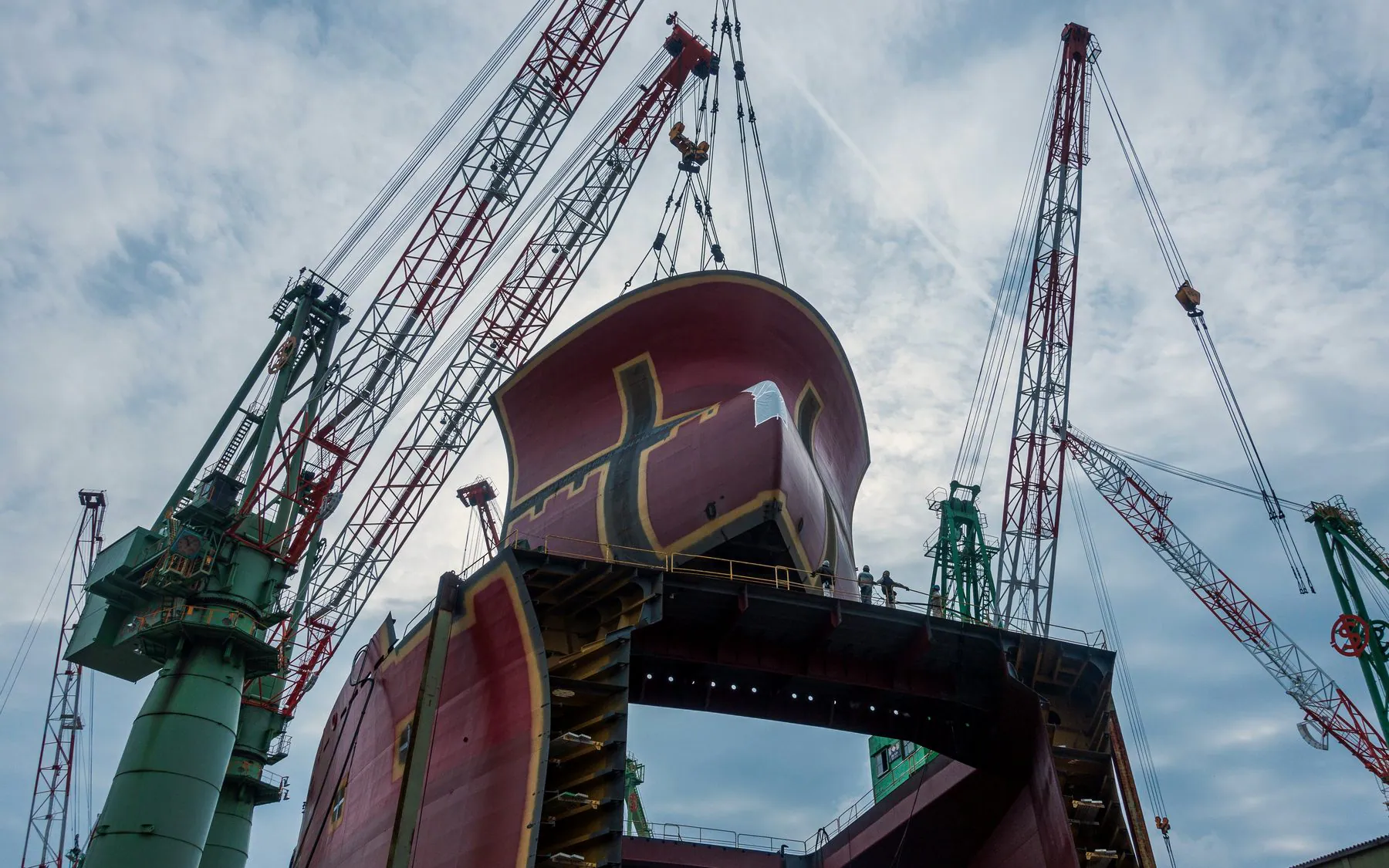
Turkish shipyards build a wide range of vessels for foreign owners, from chemical tankers and tugs to ferries, fishing and offshore vessels and superyachts. Most of the yards are in the Marmara region, above all around Tuzla and Yalova. The buyer is often a European owner, and its bank may well be in London or Northern Europe. The contract is usually governed by English law, with disputes referred to arbitration in London.
The buyer pays a large part of the price before the ship exists. The money goes to a company in another country, against a promise to build. It is secured by a refund guarantee issued by the yard's bank, which in most cases is a Turkish bank. When a project goes well, nobody reads the guarantee again. When the yard falls behind, runs short of money or applies for a concordat, the guarantee becomes the most important document in the file.
The legal difficulty is that the contract is decided in London while the hull, the yard and often the bank are in Türkiye. English law decides what the parties agreed. Turkish law decides who owns the hull and what happens when the yard is insolvent. It also decides whether a Turkish court can stop a Turkish bank from paying, and how a London award is enforced in Türkiye.
This article explains where the two systems meet in a newbuilding project and what buyers, yards and banks should provide for at the start. It builds on the section on shipbuilding disputes in our guide to maritime and shipping disputes in Türkiye.
1. English law and London arbitration are the usual choice, and Turkish law still matters
Few newbuilding contracts are drafted from scratch. Most start from a standard form and are then heavily amended. The SAJ form, published by the Shipbuilders' Association of Japan in 1974, is still the starting point for many contracts. BIMCO's NEWBUILDCON dates from 2007 and remains its current edition. Chinese yards often use the CMAC form, and Norwegian owners may propose SHIP 25, the Norwegian standard form that replaced SHIP 2000 in October 2025. Turkish yards work with all of these, and the version that reaches signature is usually a negotiated hybrid.
Turkish courts respect the parties' choice of English law. Under Article 24 of Law No. 5718 on International Private and Procedural Law (MÖHUK), contractual obligations are governed by the law the parties have chosen. On the English side, the controls on exclusion clauses in the Unfair Contract Terms Act 1977 do not apply where English law governs only because the parties chose it. That is the effect of section 27. Between a Turkish yard and a foreign buyer, the defects guarantee, the cap on liquidated damages and the exclusion of other remedies will generally be enforced as written.
If the seat is London, English law governs the arbitration agreement as well. The Arbitration Act 2025 came into force on 1 August 2025. For arbitrations begun since then, section 6A of the Arbitration Act 1996 applies the law of the seat to the arbitration agreement, unless the parties have expressly chosen another law for that agreement. Our article on arbitration clauses in Türkiye–UK contracts explains how that rule interacts with Turkish law.
A choice of English law does not take the project outside Turkish law. Under Articles 21 and 22 MÖHUK, property rights in the hull are governed by the law of the place where it is or where it is registered. That place is Türkiye. The yard's insolvency is governed by the Turkish Enforcement and Bankruptcy Law. Interim orders against a Turkish bank are made by Turkish courts under Turkish procedural law. An award or judgment against the yard must be enforced in Türkiye, where its assets are. Article 6 MÖHUK preserves Turkish rules of direct application, whatever the governing law.
2. A shipbuilding contract is more than a sale
English law treats a shipbuilding contract as a contract to design, build and deliver, not simply as a sale of a future ship. In Hyundai Heavy Industries v Papadopoulos [1980], the buyer failed to pay an instalment and the yard cancelled. The House of Lords held that the yard could still claim that instalment from the guarantors, because it had fallen due before cancellation. The contract was closer to a building contract than to a sale. In Stocznia Gdanska v Latvian Shipping [1998], the House of Lords allowed a yard that had rescinded after the buyer's default to recover the instalments that had fallen due. The buyer could not claim them back for total failure of consideration, because the yard's obligations included design and construction work, not only the transfer of the ship.
Turkish law reaches a similar characterisation by a different route. The prevailing view treats a shipbuilding contract as a contract for work (eser sözleşmesi) within Article 470 of the Turkish Code of Obligations (TBK). The contractor makes a work and the employer pays for it. Article 471 requires the contractor to perform with loyalty and care, and Article 472 makes it answerable like a seller for defects in materials it supplies. The employer has specific rights as well. Article 473 lets it withdraw before the delivery date when it is clear that the work will not be finished in time.
Those Turkish rules do not apply to a contract governed by English law. That point is easy to miss on both sides of the table. Turkish yard managers sometimes assume that the Code of Obligations will protect them in a dispute. Foreign buyers sometimes assume that a Turkish court would apply English law in every respect. Both assumptions need checking against the questions set out in the rest of this article.
3. The yard's request for more money
The price under a newbuilding contract is normally fixed and paid in instalments linked to milestones such as signing, steel cutting, keel laying, launching and delivery. The last instalment, paid on delivery, is often the largest. A Turkish yard's costs are partly in Turkish lira and partly in foreign currency, above all for steel and equipment, while the price is usually in US dollars or euros. When costs rise faster than expected, the yard may ask for more.
Under English law the yard has no general right to an increase. English law has no general doctrine of hardship, and frustration applies only where performance becomes radically different from what was agreed. A demand for more money backed by a threat not to complete can even amount to economic duress. In North Ocean Shipping v Hyundai Construction (The Atlantic Baron) [1979], the yard demanded a 10 per cent increase after the US dollar was devalued and threatened not to deliver. The court accepted that the threat was economic duress. The owners still lost their claim to recover the extra payments, because they had waited too long before challenging them and had in effect affirmed the variation.
Turkish law would treat the same situation differently. Article 480 TBK provides that a contractor under a lump-sum contract cannot ask for a higher price because the work cost more than expected. The position changes where unforeseen circumstances, or foreseeable ones that the parties did not take into account, prevent performance at the agreed price or make it extremely difficult. The contractor can then ask the judge to adapt the contract, or withdraw from it. Article 138 contains a general rule of the same kind and applies expressly to foreign currency debts. A Turkish yard under an English-law contract cannot rely on either provision.
The practical answer is to deal with price risk in the contract. SHIP 25 offers alternative pricing mechanisms with budget prices and escalation clauses. If a buyer agrees to pay more during the project, the agreement should be in writing and signed in the form the contract requires for amendments. The guarantor bank should confirm that the refund guarantee covers the new amounts.
4. Delay, liquidated damages and the right to cancel
Most contracts follow the same pattern. A short grace period after the contractual delivery date is followed by liquidated damages for each day of delay, deducted from the final instalment. Once the delay reaches a fixed number of days, the buyer may cancel and claim the refund of its instalments with interest. Delays caused by events beyond the yard's control, called permissible delays, extend the delivery date if the yard gives the notices the contract requires.
The notices matter. In Zhoushan Jinhaiwan Shipyard v Golden Exquisite [2014], the contracts provided for a reduction of US$7,000 a day for delay beyond 30 days and a right to cancel after 210 days. The yard argued that part of the delay had been caused by the buyers' own breaches. Leggatt J held that delay caused by the buyers' breach was not permissible delay under the contract. A delay the yard had not notified could not be treated as permissible either. The buyers were entitled to cancel and recover their instalments. In Adyard v SD Marine Services [2011], the yard relied on the buyer's variations to defeat a cancellation. Hamblen J held that it had to prove that they caused actual delay to the work, not merely that they could have done.
Liquidated damages are rarely struck down. Since Cavendish Square Holding v Makdessi [2015], a clause is a penalty only if it imposes a detriment out of all proportion to the innocent party's legitimate interest. A negotiated daily rate between commercial parties will seldom meet that test. Turkish law gives a merchant no better protection. Article 182 TBK lets a judge reduce an excessive penalty, but Article 22 of the Turkish Commercial Code (TTK) provides that a debtor who is a merchant cannot ask for a reduction.
Cancellation for delay does not necessarily end the buyer's claims. In Stocznia Gdynia v Gearbulk [2009], the buyer cancelled under the contract and recovered its first instalments from the refund guarantor. The yard argued that the buyer had thereby given up its claim for damages for loss of its bargain. The Court of Appeal disagreed. The contract treated a delay serious enough to justify cancellation as going to the root of the contract, so the buyer could recover both the refund and damages. Whether a particular contract makes the agreed remedies exhaustive depends on its words, and that question should be decided when the contract is drafted.
5. The refund guarantee is the buyer's real security
A buyer that pays instalments to a yard in another country needs security for their return. The contract usually makes delivery of a refund guarantee a condition of the first instalment. In Rainy Sky v Kookmin Bank [2011], for example, the price was payable in five equal instalments, delivery of guarantees in a form acceptable to the buyers' financiers was a condition precedent to the first, and the buyers could cancel if the guarantees had not been provided by a fixed date. The guarantee is issued by the yard's bank at the yard's request. It is governed by English law in most cases and refers disputes to the English courts or to London arbitration. BIMCO also publishes a standalone refund guarantee form for use with shipbuilding contracts.
Under English law the first question is whether the instrument is a demand guarantee or a true guarantee of the yard's obligations. In Wuhan Guoyu Logistics v Emporiki Bank [2012], the Court of Appeal endorsed what is known as Paget's presumption. An instrument that relates to a transaction between parties in different countries, is issued by a bank and contains an undertaking to pay on demand will almost always be construed as a demand guarantee. In Shanghai Shipyard v Reignwood [2021], the guarantor was a parent company, not a bank. The Court of Appeal still held the guarantee to be a demand guarantee, because its words said so. The words used remain decisive.
The second question is what the guarantee covers. In Rainy Sky, the yard became subject to a Korean debt workout procedure, and the buyers were entitled under the contract to a refund on that insolvency event. The bank argued that its guarantees covered refunds on termination and total loss, not on insolvency. The Supreme Court held that where a clause has two possible meanings, the court may prefer the one consistent with business common sense. A guarantee that did not cover the yard's insolvency, the situation in which a buyer most needs it, made little commercial sense.
Under a demand guarantee, the beneficiary is paid first and the merits are decided later. The follow-up decision in Wuhan Guoyu [2013] shows how far that goes. There the guarantee protected the yard, securing the buyer's second instalment. The bank paid, although an arbitration tribunal had by then decided that the instalment was never due. The Court of Appeal held that the yard's right to payment became complete when it made its demand in good faith. The bank had no claim to the money. Any adjustment was a matter between the yard and the buyer under their own contract. Our article on letters of credit and demand guarantees explains the wider principles.
Yards need security too. Buyers commonly contract through a single-ship company with no other assets, and the final instalment is the largest. If the buyer does not pay, the contract normally allows the yard to cancel, keep the instalments received, sell the vessel and claim any shortfall. Instalments that fell due before cancellation remain recoverable, as Hyundai v Papadopoulos shows. A yard building for a single-ship company should therefore ask for a payment guarantee from the buyer's parent or bank. The guarantee in the Shanghai Shipyard case, discussed in the next section, was of that kind.
6. The arbitration proviso and why timing matters
Many refund guarantees contain a proviso that changes the position when the yard disputes the buyer's claim. If the dispute is referred to arbitration under the shipbuilding contract, the bank may withhold payment until the award is published, and then pays what the award orders. The bank is not a party to the arbitration, and the proviso is how the parties make its liability follow the outcome. According to published commentary, the BIMCO form allows payment to be deferred while the claim is disputed in arbitration.
The proviso is applied strictly according to its words. The guarantee considered in the Shanghai Shipyard case secured a final instalment of US$170 million for a drillship. Its proviso applied where the dispute "is submitted either by [the Buyer] or by [the Builder] for arbitration". Arbitration was begun on the buyer's side only after the yard had made its demand. The Court of Appeal held that the proviso suspended the obligation to pay only where the dispute had been submitted to arbitration before the demand. The guarantor had to pay.
In Spliethoff's Bevrachtingskantoor v Bank of China [2015], the buyer took the opposite route. It referred its right to cancel to arbitration first, cancelled after the award declared it entitled to do so, and only then demanded payment. Carr J held that the demand was valid without any award ordering payment. At the buyer's request, the bank had confirmed that the guarantee was automatically extended while the arbitration was pending.
A buyer should read the proviso before writing to the yard and make its demand promptly once the refund falls due. It should watch the expiry date closely. The lesson for a yard is that, if it intends to contest the refund, it must start arbitration without delay. A guarantee that expires on a fixed date, without automatic extension while an arbitration is pending, is a serious weakness for the buyer.
7. A Turkish court order can stop a Turkish bank from paying
Turkish law, like English law, treats a bank letter of guarantee (teminat mektubu) as an independent obligation. It is a guarantee contract within Article 128 TBK, under which a person undertakes to compensate another if a third party's act does not happen. The Court of Cassation characterised letters of guarantee in this way in a decision on the unification of judgments of 13 December 1967. The bank must pay on a demand that complies with the letter, without examining the underlying contract.
Outside insolvency, the only way to stop such a payment in Türkiye is an interim order (ihtiyati tedbir) of a Turkish court. Article 389 of the Code of Civil Procedure (HMK) allows an interim measure where a change in circumstances would make the right much harder or impossible to obtain, or where delay would cause serious harm. Under Article 390, the applicant must show that its case on the merits is probably right, and the court may decide without hearing the other side in urgent cases. Under Article 392, the applicant must normally provide security for the losses that the order may cause. Courts are reluctant to make such orders against guarantee payments and generally require strong evidence that the call is an abuse of rights under Article 2 of the Turkish Civil Code (TMK).
An arbitration clause in the shipbuilding contract does not prevent such an order. Article 6 of the International Arbitration Law No. 4686 (MTUK), which Article 1 extends to arbitrations seated abroad, provides that a court's interim measure does not contravene the arbitration agreement. The measure lapses once the award becomes enforceable or the tribunal dismisses the claim. A Turkish bank served with an order will usually refuse to pay, and Turkish commentators accept that it may do so even where the letter promises payment notwithstanding any court order. The bank has good reason to comply. Under Article 398 HMK, a person who acts in breach of an interim order can be committed to disciplinary imprisonment of up to six months.
The yard's insolvency adds another route. Under Article 287 of the Enforcement and Bankruptcy Law (İİK), a court granting a concordat moratorium takes all measures it considers necessary to preserve the debtor's assets. Debtors have asked concordat courts to stop banks paying guarantees given at their request. A 2025 study by Levent Börü reports that regional courts of appeal are divided. The Istanbul Regional Court of Appeal, 17th Civil Chamber, held on 13 June 2019 that such an order should have been made. The same chamber took the opposite view on 12 March 2020, as did the Konya Regional Court of Appeal on 5 November 2024. Those decisions hold that a concordat court cannot interfere with the contract between the bank and the beneficiary. The study found no Court of Cassation decision on the point under the post-2018 concordat rules, mainly because these measures cannot be brought before that court. Article 287 itself provides that decisions on them cannot be appealed, and the Ankara Regional Court of Appeal has dismissed appeals on that ground.
For a foreign buyer, the risk is concrete. A guarantee governed by English law can still be blocked in practice by an order of a Turkish court addressed to the Turkish bank that issued it.
8. An English court will not treat the Turkish order as a defence
English courts have faced this situation with other countries' courts. In Spliethoff, the sellers had obtained orders in China that prevented the Bank of China from paying under the refund guarantees, and the bank relied on them. Carr J accepted that the Chinese judgments fell to be recognised. She nevertheless gave judgment against the bank and refused to stay enforcement. The bank was an international institution that issued guarantees for fees and security. Under an English-law guarantee securing an English-law contract, the bank's obligation to pay on demand was not meant to be affected by extraneous matters such as the Chinese orders. The Court of Appeal reached a similar result much earlier in Power Curber v National Bank of Kuwait [1981]. That case concerned a Kuwaiti order of provisional attachment against a bank's payment under a letter of credit.
An English judgment is only as good as the assets it can reach. A Turkish bank with a branch, a subsidiary or funds in England or elsewhere outside Türkiye can be pursued there. Enforcing the judgment in Türkiye is harder. The claimant would need an enforcement action under Articles 50 to 57 MÖHUK. Reciprocity with the United Kingdom has been argued both ways in Turkish proceedings, and public policy can be raised. Türkiye is not a party to the 2005 Hague Choice of Court Convention, so an exclusive English jurisdiction clause brings no treaty-based enforcement. A Turkish court is also unlikely to enforce a judgment that requires a Turkish bank to make a payment that another Turkish court has prohibited.
The choice of forum in the guarantee deserves more thought than it often gets. A London arbitration award against the bank would be enforced in Türkiye under the New York Convention, to which both countries are parties, so the reciprocity debate falls away. The public policy objection based on a conflicting Turkish order would remain. An exclusive English jurisdiction clause stops the buyer from suing the bank in Istanbul, because under Article 47 MÖHUK a Turkish court declines jurisdiction if the bank objects. Our article on enforcing foreign judgments and arbitral awards in Türkiye discusses those conditions.
The answer lies in the structure of the security. A buyer can ask for the guarantee to be issued, or confirmed, by a bank outside Türkiye, with the Turkish bank giving a counter-guarantee to the confirming bank. The confirming bank's undertaking is its own, governed by English law, and an order addressed to Turkish parties does not bind it. A confirmation costs money and the yard will resist it, but it moves the risk of a Turkish order from the buyer to the banks that are better placed to carry it.
9. Who owns the hull while it is being built
Many contracts say when title to the vessel passes. Some forms allow the buyer to take title progressively as the hull is built. SHIP 25 offers that as an optional appendix, presented as an alternative to a refund guarantee. Under an English-law contract such a clause may be effective between the parties. Whether it gives the buyer rights in the hull that hold good against the yard's creditors in Türkiye is a question for Turkish law.
Under Article 763 TMK, ownership of a movable passes with possession, and the hull is in the yard's possession. Article 766 allows ownership to pass without delivery where the transferor keeps possession under a special legal relationship. The same article denies effect to such a transfer if it was made to harm third parties or to evade the rules on pledges of movables, and a transfer meant to secure the buyer's instalments while the yard keeps the hull invites exactly that objection. The common view in Turkish practice, however, is that the hull belongs to the yard until delivery, and that the buyer's instalments make it a creditor rather than an owner. A buyer that wants real security in the hull needs a transaction designed for Turkish law, not an English title clause.
The hull has its own register in Türkiye. Articles 986 to 992 TTK provide for a special register of ships under construction (yapı hâlindeki gemilere özgü sicil). A hull is entered at its owner's request, or when it is mortgaged or attached, or when the yard seeks to secure its own right to a mortgage. The entry records the owner and the yard. Article 1054 allows a hull to be mortgaged once the keel has been laid and the hull clearly marked with a name or number. The finished vessel must be at least 18 gross tons. The mortgage is created by a written agreement with notarised signatures, followed by registration (Article 1055). It covers materials in the yard that have been marked for use in the vessel, and under Article 1057 it stays on the completed ship with its original rank.
A yard that finances construction with bank loans may therefore have mortgaged the hull to its lender soon after keel laying, long before delivery. Article 1013 TTK gives a yard a statutory right to have a mortgage registered for its claims arising from construction or repair, and that right cannot be waived in advance. It matters where the buyer has become the owner of the hull, because the yard can then secure its unpaid price on the buyer's property. Article 992 provides for the hull's entry to be deleted when the yard reports delivery abroad or the owner and yard request it, and deletion requires the consent of any mortgagee. A buyer should search the register before signing, before each instalment and before delivery.
Equipment supplied by the buyer needs the same attention. Owners often supply engines, cranes or navigation systems themselves. Under Article 684 TMK, the owner of a thing also owns its integral parts. Under Article 776, where a movable is joined to another as a secondary integral part, the whole belongs to the owner of the main thing, and the former owner keeps only claims for compensation or unjust enrichment. Once installed, the buyer's equipment may therefore become part of a hull that belongs to the yard. The contract should deal with that risk, and the refund guarantee should cover the value of the buyer's supplies as well as the instalments.
Insurance follows the same logic. The yard insures the hull under a builder's risks policy. Under most forms, a total loss before delivery obliges the yard to refund the instalments or, if the parties agree, to build a replacement. Under Article 1056 TTK, a mortgage on a hull under construction extends to insurance proceeds only where the owner's interest has been separately insured. The buyer should be named on the policy as co-assured or loss payee, as its lender will expect.
10. When the yard applies for a concordat
A Turkish yard in financial difficulty is more likely to apply for a concordat than to go into bankruptcy. Under Article 287 İİK, the court first grants a temporary moratorium of three months, which may be extended by up to two months. Under Article 289, a definitive moratorium of one year follows if the concordat appears capable of success. Under Article 294, no enforcement proceedings may be brought against the debtor during the moratorium, proceedings already started are suspended, and interim orders and attachments are not carried out.
Article 296 İİK is the provision that most concerns a buyer. Contracts that are important for the continuation of the debtor's business continue. Clauses that treat an application for concordat as a breach, a ground for termination or a reason for acceleration do not apply. The contract cannot be terminated on the ground that the debtor applied for concordat. A newbuilding contract is plainly important to a yard's business. A cancellation based only on the insolvency event clause, of the kind considered in Rainy Sky, is therefore unlikely to be recognised by a Turkish court. A cancellation based on delay that has reached the contractual threshold is a different matter, because it does not rest on the concordat application.
Article 297 restricts what the yard can do with its assets. During the moratorium the debtor cannot create security, give guarantees or make gratuitous dispositions without the court's permission, and it cannot transfer or encumber movables important for the continuation of its business. A transfer of an unfinished hull to the buyer, or an arrangement for the buyer to complete it elsewhere, will usually require the court's permission after the commissioner has given an opinion.
The buyer must take part in the proceeding. Under Article 299 İİK, creditors are invited to file their claims within fifteen days of the commissioner's announcement. A creditor that does not file is excluded from the negotiations unless its claim appears in the yard's balance sheet. A foreign buyer that relies only on correspondence with the yard can easily miss the deadline.
In London, the picture is different. An LMAA tribunal applying English law will normally decide the buyer's right to cancel under the contract. In Fibria Celulose v Pan Ocean [2014], the English court had recognised a Korean rehabilitation proceeding, but still declined to apply a Korean restriction on termination to a contract governed by English law. Recognition of a Turkish concordat in England under the Cross-Border Insolvency Regulations 2006 could stay proceedings against the yard there, but it would not reach the bank. Under the rule in Gibbs, a Turkish concordat does not discharge a debt governed by English law. Our article on English-law debt and Turkish restructurings explains that rule. The practical value of the English position depends on assets outside Türkiye, and a yard rarely has many.
The refund guarantee remains the buyer's main protection. It is the bank's own obligation and the concordat does not release it. Article 303 İİK preserves the rights of a creditor that does not consent to the concordat against those who are liable together with the debtor. The risk lies in the concordat court's power to order measures under Article 287 and in the divided case law described above. If the concordat fails and the yard is declared bankrupt, the hull falls into the bankruptcy estate, and a buyer without registered security ranks as an ordinary creditor. Our guide to the Turkish concordat covers the procedure from the creditor's side.
11. Delivery, documents and the defects guarantee
Delivery is a documentary event as much as a physical one. The parties sign a protocol of delivery and acceptance, the yard delivers a bill of sale and builder's certificate, and the classification society's and flag state's documents must be in order. For a hull built in Türkiye, the buyer needs evidence that any entry in the register of ships under construction has been deleted and that no mortgage remains on it. The final instalment is often paid into an escrow account and released against those documents.
A buyer is rarely entitled to reject a vessel for minor defects. Most contracts provide for acceptance with a list of outstanding items, and sometimes a retention from the final instalment until they are completed. After delivery, the yard's liability for defects is usually limited to a guarantee period, typically twelve months, during which it must repair defects or pay for their repair. The standard forms call this the guarantee, but it has nothing to do with the bank's refund guarantee. Most forms make it the buyer's only remedy for defects. Without such a clause, a claim for breach of an English-law contract could be brought within six years of the breach under section 5 of the Limitation Act 1980. Turkish law would allow two years from delivery under Article 478 TBK.
Defect claims are harder to pursue once the ship has left Türkiye. Repairs are done wherever the ship happens to be, while the yard's assets stay in Türkiye. A buyer should consider a warranty bond or a retention from the final instalment, an agreed procedure for repairs abroad, and a guarantee engineer on board for the first months of operation.
12. Disputes in London and enforcement in Türkiye
Disputes between the buyer and the yard go to LMAA arbitration in London under most contracts. An award against the yard is enforced in Türkiye under the New York Convention, to which Türkiye acceded in 1992 with reciprocity and commercial reservations, and under Articles 60 to 63 MÖHUK. If the yard is in a concordat moratorium, Article 294 İİK suspends enforcement against it, and the buyer's claim will be dealt with under the concordat plan.
A yard sometimes starts proceedings in Istanbul despite the arbitration clause, for example by seeking a declaration that the buyer's cancellation was invalid. Under Article 5 MTUK, which applies where the seat is abroad, and Article 413 HMK, a Turkish court dismisses a case covered by a valid arbitration agreement if the defendant objects. The objection must be raised in time. In an appropriate case, the buyer can also seek an anti-suit injunction in London. Our article on parallel proceedings between Istanbul and London discusses both routes.
Claims against the bank are commonly brought in the English courts under the guarantee's jurisdiction clause. No permission is needed to serve the claim abroad where the contract gives the English court jurisdiction. Service in Türkiye, however, normally goes through the Hague Service Convention, and Türkiye has objected to the alternative channels in its Article 10, including service by post. A bank that has appointed an agent for service of process in England can be served much faster. That clause costs nothing at the drafting stage.
13. A worked example
A shipowner based in London orders two 7,000 dwt chemical tankers from a yard in Tuzla, at US$26 million each. The contract is an amended SAJ form, governed by English law with LMAA arbitration. The price is payable in four pre-delivery instalments of 10 per cent and a final instalment of 60 per cent on delivery. The buyer may cancel if delivery is more than 180 days late. An Istanbul bank issues refund guarantees under English law, payable on first demand, with an arbitration proviso and an expiry date eight months after the contractual delivery date. The buyer's lender takes an assignment of the guarantees.
The first ship falls behind. When it is 150 days late, the yard applies for a concordat in Istanbul and obtains a temporary moratorium. The buyer asks Turkish counsel to watch for the commissioner's announcement, so that its claim is filed within the fifteen-day period. Its first instinct is to cancel on the insolvency event clause. In Türkiye, Article 296 İİK makes that cancellation ineffective. The buyer waits until the delay passes the 180-day threshold and then cancels on that ground. It demands a refund of US$10.4 million plus interest from the yard and, when the yard does not pay, from the bank. The guarantee expires about two months later, so the demand cannot wait.
Two things now decide whether the buyer is paid. The first is timing. The yard says that steel deliveries were late and that 40 days were permissible delay. If it began arbitration before the buyer's demand on the bank, the proviso allows the bank to wait for the award. If it began arbitration only afterwards, the Shanghai Shipyard decision suggests that the bank must pay now. The second is the Turkish court. The yard asks the concordat court to order the bank not to pay. Whether it does so depends on which line of appellate authority the court follows, and its decision cannot be appealed. If the order is made, the bank will refuse. The buyer can sue the bank in London and win, but the judgment may be enforceable only against the bank's assets outside Türkiye.
The second ship is at an earlier stage. Its keel was laid three months earlier, and the yard then mortgaged the hull to its own lender under Article 1054 TTK. The buyer has paid three instalments. It has no rights in the hull, and its only realistic recovery is the second refund guarantee.
Had the guarantees been confirmed by a London bank, an order of the Istanbul court would not have stopped payment. Had they expired one year after the delivery date with automatic extension during arbitration, the buyer would not be racing the expiry date. And had the buyer searched the register after keel laying, it would have learned of the mortgage when it was registered, not after the concordat.
14. Questions to settle before the contract is signed
The first questions are about the guarantee. Who will issue it, and will a bank outside Türkiye confirm it? Does it cover every event on which a refund is due under the contract, including insolvency, total loss and rejection? Does it expire late enough, with automatic extension while an arbitration is pending? Is the arbitration proviso drafted so that both sides know exactly when it applies? Does the amount step up as each instalment is paid, and does it cover the buyer's supplies? How wide is any sanctions clause that would allow the bank to refuse payment? Has the bank appointed an agent for service in England? Delivery of the guarantee in the agreed form should be a condition of the first instalment.
The second group concerns delay and money. The contract should state clearly what counts as permissible delay, what notices the yard must give and when, and how the days are counted towards the cancellation threshold. It should say whether the contractual remedies for delay are exhaustive or leave room for damages for loss of the bargain. If the yard needs protection against cost increases, it should be given by an escalation clause, not left to renegotiation under pressure.
The third group concerns Turkish law. The buyer should know whether the hull is or will be mortgaged, how the register of ships under construction will be searched, and what will happen to the hull if the yard enters a concordat. The insolvency clause should be supported by delay-based cancellation rights that do not depend on the concordat application. Delivery documents should include evidence of deletion from the Turkish register.
The last question is how disputes will be resolved and enforced. London arbitration is the usual choice for the contract. The guarantee may go to the English courts or to London arbitration. In Türkiye an award is easier to enforce than an English judgment, and the parties should know where the bank's assets are before they choose.
Conclusion
A newbuilding contract with a Turkish yard is, in most cases, an English-law contract performed in Türkiye. English law decides what the parties agreed, how the guarantee is read and whether the buyer was entitled to cancel. Turkish law decides who owns the hull, what a concordat does to the contract and whether a Turkish bank can be stopped from paying.
The refund guarantee is the point where the two systems meet most sharply. Under English law it is a demand instrument that pays first and leaves the merits for later. In Türkiye, a court order can still block it in practice, and Turkish courts are divided on whether a concordat court can do so.
Buyers should secure their instalments with a guarantee that will be paid without the help of a Turkish court, ideally confirmed outside Türkiye, and check the Turkish register before paying. Yards should know that English law will hold them to the price and the delivery date. Banks should assume that an English court will not excuse them because of an order in Istanbul.
How Terziolu & Partners Can Assist
Terziolu & Partners advises shipowners, Turkish yards, banks and financiers on newbuilding and repair contracts within our maritime work. That covers the Turkish law aspects of English-law contracts and refund guarantees, and searches and registrations in the register of ships under construction. It also covers interim orders concerning letters of guarantee and claims in a yard's concordat.
Some projects involve London arbitration, English court proceedings or enforcement in more than one country. In those cases we coordinate the Turkish and English steps between Istanbul and London through our cross-border legal coordination work, with appropriately qualified counsel in each jurisdiction. Contact us to review a contract or guarantee before signature, or to act on a delayed project.
Selected Legislation, Authorities and Materials
Türkiye
Turkish Commercial Code No. 6102 (TTK): Articles 22 (penalties agreed by merchants), 986 to 992 (register of ships under construction), 1013 (shipyard's right to a mortgage) and 1054 to 1058 (mortgages on ships under construction).
Turkish Code of Obligations No. 6098 (TBK): Articles 128 (undertaking for the act of a third party), 138 (excessive difficulty of performance), 182 (amount of a penalty), 470 to 473 (contract for work), 478 (limitation of defect claims) and 480 (lump-sum price).
Turkish Civil Code No. 4721 (TMK): Articles 2 (good faith and abuse of rights), 684 (integral parts), 763 (transfer of ownership of movables), 766 (transfer without delivery) and 776 (joining and mixing of movables).
Enforcement and Bankruptcy Law No. 2004 (İİK): Articles 287 (temporary moratorium and protective measures), 289 (definitive moratorium), 294 (effects of the moratorium), 296 (contracts), 297 (restrictions on the debtor), 299 (filing of claims) and 303 (rights against co-obligors).
Code of Civil Procedure No. 6100 (HMK): Articles 389, 390 and 392 (interim measures), 398 (breach of an interim measure) and 413 (preliminary objections, including arbitration).
Law on International Private and Procedural Law No. 5718 (MÖHUK): Articles 6 (rules of direct application), 21 and 22 (rights in rem), 24 (contracts), 47 (jurisdiction agreements), 50 to 57 (enforcement of foreign judgments) and 60 to 63 (enforcement of foreign arbitral awards).
International Arbitration Law No. 4686 (MTUK): Article 1, third paragraph (application of Articles 5 and 6 where the seat is abroad), Article 5 (arbitration objection) and Article 6 (interim measures by courts and tribunals).
Court of Cassation, Grand General Assembly on the Unification of Judgments, 13 December 1967, No. 16/7: legal nature of bank letters of guarantee.
Istanbul Regional Court of Appeal, 17th Civil Chamber, decisions of 13 June 2019 and 12 March 2020, and Konya Regional Court of Appeal, 3rd Civil Chamber, decision of 5 November 2024: interim measures against payment under letters of guarantee in concordat proceedings.
Levent Börü, "Konkordatoda Teminat Mektuplarının Paraya Çevrilmesinin Değerlendirilmesi", Hacettepe Hukuk Fakültesi Dergisi 15(3), 2025: letters of guarantee in concordat proceedings.
New York Convention, status of Contracting States (UNCITRAL) and Hague Conference on Private International Law status tables for the 2005 Choice of Court Convention and the 1965 Service Convention.
United Kingdom
Unfair Contract Terms Act 1977, section 27: choice of law clauses.
Arbitration Act 1996, section 6A: law applicable to the arbitration agreement, inserted by the Arbitration Act 2025.
Limitation Act 1980, section 5: time limit for actions founded on simple contract.
Rainy Sky SA v Kookmin Bank [2011] UKSC 50: construction of refund guarantees and business common sense.
Wuhan Guoyu Logistics Group Co Ltd v Emporiki Bank of Greece SA [2012] EWCA Civ 1629: Paget's presumption and demand guarantees; and [2013] EWCA Civ 1679: payment under a demand guarantee where the underlying sum was not due.
Shanghai Shipyard Co Ltd v Reignwood International Investment (Group) Co Ltd [2020] EWHC 803 (Comm), reversed by the Court of Appeal in [2021] EWCA Civ 1147: demand guarantees and arbitration provisos.
Spliethoff's Bevrachtingskantoor BV v Bank of China Ltd [2015] EWHC 999 (Comm): refund guarantees as performance bonds, foreign court orders and stay of enforcement.
Stocznia Gdynia SA v Gearbulk Holdings Ltd [2009] EWCA Civ 75: cancellation under the contract and damages for loss of bargain.
Zhoushan Jinhaiwan Shipyard Co Ltd v Golden Exquisite Inc [2014] EWHC 4050 (Comm): permissible delay, notices and cancellation.
Adyard Abu Dhabi v SD Marine Services [2011] EWHC 848 (Comm): prevention principle and actual delay.
Cavendish Square Holding BV v Makdessi [2015] UKSC 67: the penalty rule.
Fibria Celulose S/A v Pan Ocean Co Ltd [2014] EWHC 2124 (Ch): recognition of a foreign insolvency proceeding and termination rights under an English-law contract; and the Cross-Border Insolvency Regulations 2006, SI 2006/1030.
Hyundai Heavy Industries Co Ltd v Papadopoulos [1980] 1 WLR 1129 (HL); Stocznia Gdanska SA v Latvian Shipping Co [1998] 1 WLR 574 (HL); North Ocean Shipping Co Ltd v Hyundai Construction Co Ltd (The Atlantic Baron) [1979] QB 705; Power Curber International Ltd v National Bank of Kuwait SAK [1981] 1 WLR 1233 (CA).
BIMCO, NEWBUILDCON and BIMCO, Refund Guarantee for Shipbuilding Contracts.
Related Insights
- Maritime
Maritime and Shipping Disputes in Türkiye: Legal Guide for Cargo, Charterparty and Vessel Claims
Maritime disputes require speed, evidence discipline and a clear understanding of commercial reality. In Türkiye, cargo claims, charterparty disputes, ship arrest, demurrage, marine insurance and port-related issues should be managed with both legal precision and industry awareness.
- International Business & Investment
Letters of Credit, Demand Guarantees and Trade Finance Disputes: When Documents Control the Money
In trade finance, the bank does not usually pay the story. It pays the documents. Letters of credit, demand guarantees, standby credits and performance bonds can make international trade faster and more bankable, but they can also turn a small documentary mistake into non-payment, an aggressive bond call into immediate cash loss, or a shipping discrepancy into a full commercial dispute. This briefing explains how exporters, importers, contractors, banks and insurers should think about the instruments before the money moves.
- Dispute Resolution
Concordat in Türkiye: A Creditor's Guide to Security, Voting and Recovery
A Turkish concordat does not extinguish creditor rights, but it materially changes how those rights may be exercised. This briefing examines the process from temporary respite through confirmation, with particular attention to enforcement, collateral, continuing contracts, claim registration, creditor voting, guarantees, post-respite financing and remedies where the confirmed plan is not performed.
- Corporate & Commercial
English-Law Debt and Turkish Restructurings: Concordat, Restructuring Plans and the Rule in Gibbs
A confirmed Turkish concordat binds creditors in Türkiye, but under the rule in Gibbs it does not discharge a debt governed by English law. For Turkish companies with English-law loans, bonds or guarantees, a restructuring that holds in both countries usually needs an English-law mechanism alongside the Turkish one, and evidence that each order will be recognised where the assets are.