The 2010 HNS Convention and Türkiye: Liability, Insurance and Compensation for Hazardous Cargo Incidents
The 2010 HNS Convention will enter into force on 29 November 2027, introducing a new international liability and compensation regime for hazardous and noxious substances carried by sea. Türkiye is already a Contracting State. This briefing examines what the regime will mean for shipowners, insurers, cargo receivers, importers, terminals and claimants connected with Turkish maritime trade.
- Written by
- Berat Murat Terzioğlu, Director of Legal & International Coordination
- Legal review
- Yavuz Selim Terzioğlu, Founding Partner
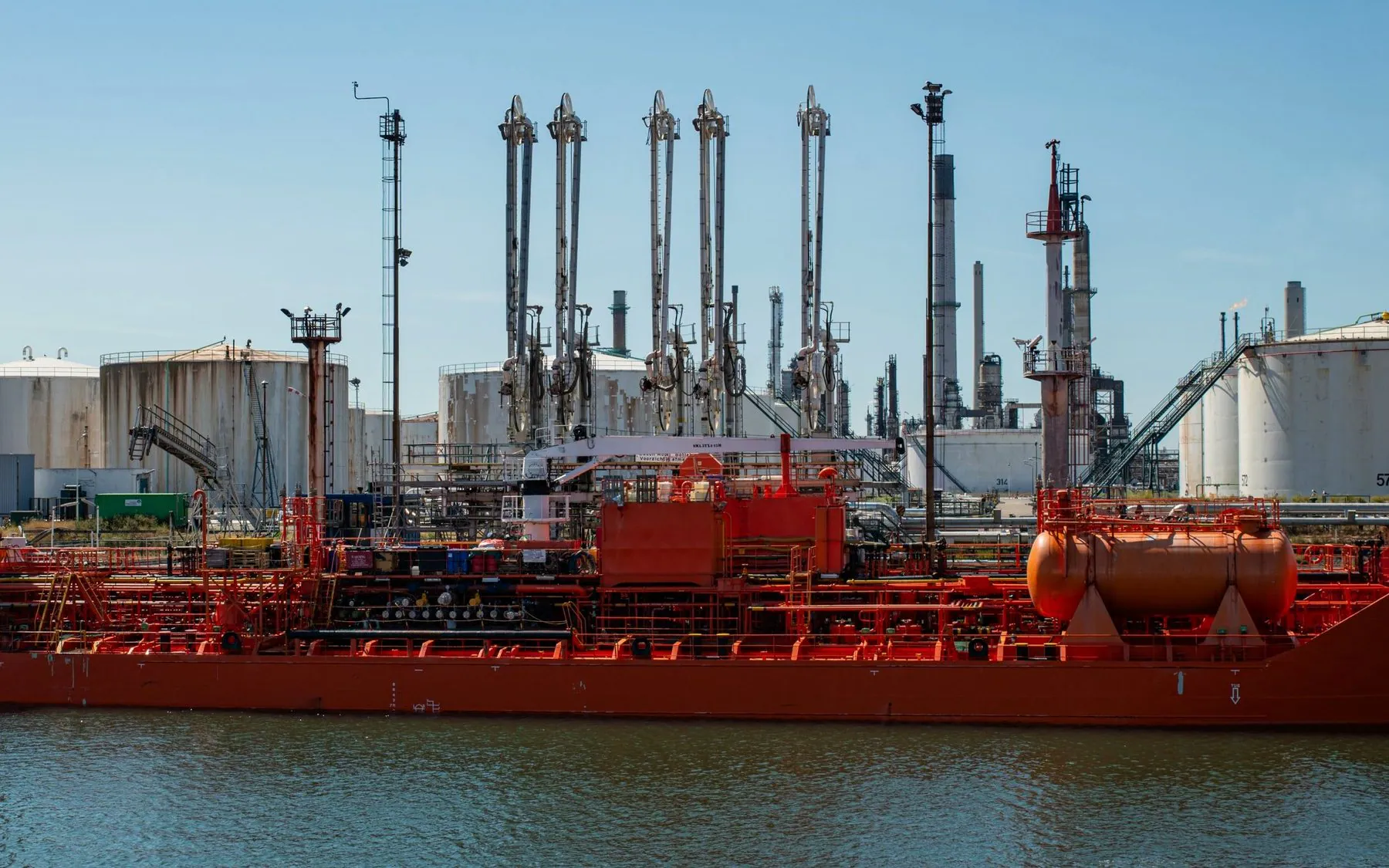
For many years, international maritime law has contained developed liability regimes for oil pollution from tankers, bunker pollution, passenger claims and hazardous wrecks.
Hazardous and noxious cargo presented a conspicuous gap.
A casualty involving chemicals, liquefied gases or other dangerous cargo can produce consequences considerably broader than an ordinary pollution spill. The event may involve toxic contamination, fire, explosion, death or personal injury, destruction of property, interruption of fisheries or tourism, emergency response expenditure and long-term environmental restoration.
The International Convention on Liability and Compensation for Damage in Connection with the Carriage of Hazardous and Noxious Substances by Sea, 2010 (the 2010 HNS Convention) was designed to place those losses within a dedicated international compensation regime.
That regime is now moving from theory to operation.
On 29 May 2026, the final treaty conditions for entry into force were satisfied. IMO has confirmed that the Convention will enter into force on 29 November 2027. Türkiye is one of the Contracting States and deposited its instrument of ratification with IMO on 23 April 2018.
For Turkish maritime trade, the significance goes beyond shipowners.
The Convention divides the financial burden between the shipping industry and the industries receiving hazardous and noxious cargo. It creates compulsory insurance obligations, gives claimants direct recourse against insurers and establishes an international HNS Fund financed through cargo interests.
That makes the Convention relevant to shipowners and P&I clubs, but also to chemical companies, energy businesses, importers, terminal operators and entities receiving HNS cargo in Türkiye. It also adds a new layer to the wider landscape of maritime and shipping disputes in Türkiye.
1. Türkiye is already a Contracting State; the regime itself starts in 2027
Türkiye's participation is not a recent policy decision taken because the Convention is now entering into force.
Parliamentary approval was given through Law No. 6949, published in the Official Gazette on 3 April 2017, and Türkiye deposited its instrument of ratification with the IMO Secretary-General in April 2018. The Turkish parliamentary materials expressly identified Türkiye's position as an importing State for both petroleum and HNS cargo and referred to the risks created by the volume of foreign ships and hazardous substances moving through Turkish waters.
What changed in 2026 was the international position.
The Convention required at least 12 States, four of them with not less than 2 million units of gross tonnage each, and at least 40 million tonnes of contributing cargo received in those States. The final requirement was met in May 2026, when contributing cargo reported for the 2025 reporting year exceeded the threshold, triggering the 18-month period before entry into force.
Finland subsequently became the thirteenth Contracting State on 30 June 2026.
The practical consequence is that businesses no longer need to ask whether the HNS regime will ever become operational.
They need to prepare for a known effective date.
2. "HNS" is much broader than chemical pollution
The Convention does not create a free-standing commercial definition of "dangerous cargo".
HNS is identified by reference to substances regulated under existing IMO conventions and codes. The categories include oils, noxious and dangerous liquid substances, liquefied gases, liquids with a flashpoint not exceeding 60°C, dangerous goods carried in packaged form and certain chemically hazardous solid bulk materials. IMO describes the Convention as potentially covering more than 2,000 substances, including chemicals, acids, fertilizers, alcohols, LNG and LPG.
That breadth matters because the Convention is not merely a pollution treaty.
Qualifying damage includes:
- loss of life and personal injury;
- damage to property outside the ship;
- economic loss caused by environmental contamination;
- reasonable preventive measures and losses caused by those measures; and
- reasonable environmental reinstatement measures.
The geographical scope also differs according to the type of loss. Damage in the territory or territorial sea of a State Party is covered; environmental contamination can extend to its exclusive economic zone or equivalent maritime area; and certain non-pollution damage outside any State's territorial sea can be covered where the HNS was carried on a ship registered in a State Party. Preventive measures can fall within the regime wherever taken.
That distinction becomes important in major casualties where contamination, explosion damage and preventive expenditure may occur in different locations.
3. The Convention channels primary liability to the registered shipowner
The first tier of the regime is deliberately simple from a claimant's perspective.
Under Article 7, the shipowner is subject to strict liability for qualifying damage caused by HNS in connection with its carriage by sea. A claimant does not have to begin by proving negligent navigation, defective management or another traditional maritime fault on the part of the owner or crew.
The Convention nevertheless recognises limited defences.
The owner may avoid liability in specified circumstances, including exceptional war or natural-event cases, intentional third-party conduct, particular failures concerning navigational aids and certain situations where the shipper or another person failed to disclose the hazardous nature of the cargo. The latter defence is especially significant where deficient cargo information caused the loss or prevented the owner from obtaining the mandatory HNS insurance, and neither the owner nor its servants or agents knew, or reasonably ought to have known, the hazardous nature of the cargo.
This creates an important documentary issue for cargo interests.
Accurate classification and communication of the nature of the substance is not simply a dangerous-goods compliance function. In a major casualty it can become part of the liability analysis.
The Convention also channels claims away from a range of maritime participants, including crew, pilots, charterers, managers, operators, salvors and persons taking preventive measures, unless the high statutory threshold for intentional or reckless personal misconduct is established.
The purpose is to concentrate the principal compensation claim on the shipowner and the financial-security structure supporting that liability.
4. Liability is limited, but the limit is substantially higher for packaged HNS
The shipowner is ordinarily entitled to limit liability by constituting a Convention limitation fund.
The amount depends both on vessel tonnage and on whether the casualty involves bulk or packaged HNS:
- Bulk HNS: the limit starts at 10 million SDR for ships up to 2,000 GT, with a maximum owner liability of 100 million SDR.
- Packaged HNS, mixed bulk and packaged HNS, or cases where the source cannot be distinguished: the limit starts at 11.5 million SDR for ships up to 2,000 GT, with a maximum owner liability of 115 million SDR.
Between the starting and maximum limits, the amount increases according to the tonnage formula specified in Article 9.
The distinction was deliberately introduced by the 2010 Protocol.
Packaged dangerous goods can be harder to identify and may create particularly complex response conditions following a casualty. The 2010 regime therefore increased the first-tier limit where packaged HNS is involved.
The owner's right to limit is not absolute. It is lost where the claimant proves that the damage resulted from the owner's personal act or omission committed with intent to cause the damage, or recklessly and with knowledge that the damage would probably result.
That is a deliberately demanding test.
Ordinary navigational fault or crew negligence is not, by itself, equivalent to breaking limitation.
5. The limitation fund can also affect ship arrest strategy
The HNS Convention has a direct procedural relationship with maritime security.
Once an owner entitled to limitation has constituted the Article 9 fund, Article 10 provides protection against separate enforcement against the owner's other assets for Convention claims. In the circumstances prescribed by the Article, courts must release a ship or other owner property arrested in respect of the same HNS claim, together with corresponding security, provided the claimant has access to the court administering the fund and the fund is actually available for the claim.
That point is particularly relevant in Türkiye because ship arrest is often the first effective response to a serious maritime claim.
After the HNS regime enters into force, a claimant may still need to act urgently to preserve security. But the litigation strategy cannot stop with obtaining the arrest.
Counsel will also need to consider whether an HNS limitation fund has been constituted, where it has been constituted, whether the Turkish claimant has effective access to it and whether Article 10 requires release of the arrested asset.
HNS claims therefore create a direct interface between substantive liability, limitation and maritime security.
6. Compulsory insurance materially improves the claimant's position
The Convention does not rely solely upon the shipowner's balance sheet.
Article 12 requires the registered owner of a ship actually carrying HNS to maintain insurance or other financial security sufficient to cover its Convention liability. A State-issued or State-certified HNS insurance certificate evidences compliance.
The port-State effect is particularly important.
A Contracting State must ensure that the required insurance or security exists for qualifying ships wherever registered when entering or leaving a port in its territory or arriving at or leaving an offshore facility in its territorial sea. A non-Party flag does not therefore automatically remove the certificate requirement when the ship trades to a Party's ports.
For Türkiye, that means the regime is relevant to far more than the Turkish-flagged fleet.
Once the Convention is operative, foreign HNS carriers calling at Turkish ports will also fall within the port-State insurance architecture.
IMO estimates that approximately 65,000 ships will require HNS insurance certificates.
For owners and P&I insurers, certification readiness is consequently an operational issue as well as an insurance issue.
7. Claimants will have a direct right of action against the insurer
Perhaps the most important claims feature in Article 12 is the direct action.
A person with a qualifying compensation claim may proceed directly against the insurer or other entity providing the owner's financial security. The insurer can invoke the owner's Convention defences and the applicable limitation amount, subject to the specific rules in Article 12, but cannot rely on the full range of private contractual defences it might otherwise possess against the insured owner.
That materially changes claimant risk.
Without a direct-action regime, a successful liability claim can still become a collection problem if the shipowner is insolvent, undercapitalised or incorporated in a jurisdiction where enforcement is difficult.
The Convention connects the injured party directly to the compulsory financial security.
For P&I insurers and other guarantors, the same provision means that the HNS policy is not merely an indemnity relationship with the member.
It forms part of the statutory claims architecture.
8. The HNS Fund provides the second tier, up to 250 million SDR per incident
Shipowner liability is only the first layer.
The Convention establishes an international HNS Fund which will provide additional compensation where the owner's first-tier liability is exhausted or where compensation cannot otherwise be obtained in full in the circumstances contemplated by the Convention.
The combined maximum available under the two tiers is 250 million SDR per incident, including sums paid by the owner and insurer.
This structure reflects a deliberate sharing of maritime risk.
The shipping industry funds the first tier through compulsory owner insurance.
Cargo interests support the second tier through the HNS Fund.
The Fund is expected to operate through a system broadly modelled on the international oil-pollution compensation funds. Preparations are already underway: the HNS Fund's headquarters are to be co-located with the IOPC Funds in London, sharing the same Director, and the existing IOPC institutional structure is being used to prepare for commencement in 2027.
This matters for Türkiye not only as a coastal and shipping State, but because Parliament expressly recognised Türkiye's substantial role as an importing State for HNS cargo when approving the Protocol.
9. The party paying into the Fund may be the cargo receiver, not the shipper
The second tier creates a regulatory responsibility that sits on the cargo side of the transaction.
The Convention uses the concept of the receiver of contributing HNS cargo. In its standard formulation, that will generally be the person physically receiving the contributing cargo, subject to agency arrangements and the alternative domestic approach allowed by the Convention. IMO and the IOPC Funds have highlighted the definition of receiver as a central implementation issue because it determines both cargo reporting and eventual contribution responsibility.
The commercial labels used in a supply contract are therefore not necessarily decisive.
An entity may describe itself as importer, purchaser, terminal operator, storage provider or consignee. For HNS purposes, the receiving chain and the domestic implementation of the Convention need to be examined more carefully.
The 2010 regime also contains an important distinction between covered cargo and contributing cargo.
Packaged HNS remains covered for compensation purposes. An accident involving packaged dangerous goods can trigger the Convention and, as noted above, even attracts a higher owner limitation ceiling.
But packaged HNS was removed from the cargo base contributing financially to the HNS Fund under the 2010 Protocol. Fund contributions are based principally on qualifying HNS received in bulk.
That is one of the most easily misunderstood aspects of the regime:
a cargo can create an HNS compensation claim without itself being a cargo on which HNS Fund contributions are calculated.
10. Cargo reporting will become a compliance issue for Turkish receivers
The HNS Fund cannot operate without reliable cargo data.
The Convention requires Contracting States to report contributing cargo, including information necessary to identify persons potentially liable for contributions. Contributions are then calculated by reference to cargo received in Contracting States during the relevant preceding year.
The Fund structure contemplates a general account and separate accounts for oil, LNG and LPG, designed in part to limit cross-subsidisation between materially different HNS sectors. Contribution obligations depend on the category and quantity received.
For Turkish businesses, this is likely to matter well before the first major casualty occurs.
Companies receiving bulk chemicals, liquefied gases, oils or other qualifying HNS through Turkish ports and terminals should be able to identify:
- what substance was received;
- how it is classified under the Convention;
- the volume received;
- the entity that constitutes the relevant receiver;
- the port or terminal of final receipt; and
- whether the cargo is contributing cargo for Fund purposes.
IMO and the IOPC Funds have developed dedicated implementation material and the HNS Finder to assist States and industry with classification and reporting.
The precise Turkish administrative reporting mechanism should be checked against the domestic measures in force as implementation proceeds toward November 2027. The Convention itself creates the international framework; businesses should not assume that a commercial cargo manifest will automatically satisfy every future domestic reporting requirement, which is why HNS reporting belongs within a disciplined regulatory and compliance programme.
11. HNS does not replace the existing oil-pollution regimes
One of the more difficult aspects of a maritime casualty can be identifying which international liability regime applies.
The HNS Convention was designed to fill a gap, not displace the established conventions.
Pollution damage already falling within the Civil Liability and Fund Convention regime for persistent oil carried as cargo is excluded from HNS in order to prevent overlap. Bunker pollution is likewise governed by its own international framework where applicable. Radioactive materials falling within the relevant excluded category are also outside the HNS regime.
The distinction can become subtle because oil itself can qualify as HNS for some purposes.
IMO expressly notes that although tanker oil-pollution damage covered by the CLC/Fund regime is excluded, the HNS Convention can cover other types of loss arising from the same hazardous cargo, such as personal injury or fire and explosion damage.
A casualty involving a chemical tanker or mixed dangerous cargo should therefore not be classified by shorthand.
The first legal task is to identify the substance, the type of damage and the applicable international regime.
12. Time bars are strict and should be treated as extinction periods
Article 37 contains an important claims deadline.
Rights against the shipowner under the Convention are extinguished unless proceedings are commenced within three years from the date the claimant knew or reasonably ought to have known of both the damage and the identity of the owner.
HNS Fund claims are subject to a corresponding three-year regime.
In all cases there is an absolute ten-year long-stop period from the incident, with special treatment where the incident consists of a series of occurrences.
This matters because the wording is stronger than an ordinary procedural deadline.
The Convention speaks in terms of the right to compensation being extinguished.
Long-tail contamination or personal injury claims should therefore not be allowed to drift while the parties negotiate informally with the owner, P&I club or Fund.
Evidence preservation and time-bar analysis need to begin with the incident.
13. Jurisdiction follows the casualty and the Convention, not necessarily the contract
Article 38 establishes a dedicated jurisdictional framework for claims against the owner and financial-security provider.
Where HNS damage occurs in the territory, territorial sea or relevant maritime zone of a State Party, claims are ordinarily brought before the courts of the relevant affected State Party. Once a limitation fund is constituted, the court in the State where that fund has been established obtains exclusive jurisdiction over its distribution.
This is significant in a sector where the surrounding commercial documents may contain foreign jurisdiction or arbitration provisions.
An HNS victim claim is not simply a contractual cargo dispute.
The Convention establishes its own liability defendant, compulsory insurance, direct action and jurisdictional rules.
Türkiye's ratification materials contain an additional point that may become relevant in cross-border judgment enforcement. Türkiye made a declaration concerning Article 40, stating that it would apply the Convention's judgment-recognition provision only in relation to States which Türkiye recognises and with which it has diplomatic relations.
That is a narrow point, but in a genuinely international casualty it may matter, alongside the general rules on the recognition and enforcement of foreign judgments in Türkiye.
Forum analysis should therefore be completed under the Convention itself rather than derived only from the charterparty, bill of lading or underlying sale contract.
14. Personal injury claims receive statutory priority
The Convention does not necessarily distribute a limitation fund pro rata across every category of claim from the outset.
Article 11 gives death and personal-injury claims a statutory priority over other claims, subject to the Convention's two-thirds mechanism.
That can materially affect recovery modelling after a catastrophic casualty.
A single incident may generate claims by injured crew or third parties, coastal businesses, property owners, public authorities and environmental-response bodies.
The headline limitation amount therefore does not tell an individual property or economic-loss claimant what percentage will ultimately be recovered.
The composition of the overall claims pool matters.
15. The Convention does not eliminate recourse between commercial parties
Channelled strict liability simplifies the victim's claim.
It does not necessarily determine who ultimately bears every economic consequence between the parties involved in the transportation chain.
Article 7 expressly preserves the owner's rights of recourse against third parties, including the shipper or receiver of the substance.
That preserves the importance of charterparty obligations, dangerous-goods declarations, cargo information, indemnities and contractual risk allocation.
Suppose an owner becomes strictly liable to third parties after an incident, but the loss was materially connected to inaccurate information supplied about the cargo.
The Convention may determine the external victim-facing claim.
It does not necessarily end the internal recourse analysis, which will often run in parallel with insurance subrogation and recovery claims by the insurers who paid.
For owners, charterers, shippers and cargo interests, HNS contractual drafting should therefore be reviewed alongside the new statutory regime rather than regarded as superseded by it.
16. Turkish businesses have a preparation window, not a reason to wait until 2027
There remains more than a year before entry into force.
For some businesses, that may appear to remove any immediate urgency.
In practice, the preparation required is structural.
Shipowners should identify vessels that actually carry qualifying HNS, review P&I arrangements and follow the Turkish and flag-State certification process for Article 12 certificates.
Insurers and P&I clubs should prepare for a direct-action regime in which claimants have statutory access to the financial-security provider.
Cargo receivers and importers should map incoming bulk HNS volumes and determine which entities may be treated as receivers for reporting and contribution purposes.
Terminals and storage operators should examine whether their contractual role could place them within the receiver analysis and whether their systems retain the data required for reporting.
Shippers and charterers should review cargo-description procedures, declarations and indemnity structures, because failures concerning the hazardous nature of the cargo can become directly relevant under Article 7.
And claim handlers and maritime litigators should integrate the new limitation, insurance, Fund, jurisdiction and time-bar structure with existing Turkish ship-arrest and casualty practice.
This is not a regime that can be implemented by amending a single insurance clause in November 2027.
Conclusion
The significance of the 2010 HNS Convention is not that it creates another category of maritime pollution claim.
It changes the architecture of recovery after a hazardous-cargo casualty.
From 29 November 2027, qualifying HNS claims connected with Türkiye will sit inside a two-tier international system. The registered owner will face strict liability supported by compulsory financial security. Victims will be able to claim directly against the insurer. The owner's liability will ordinarily be limited under a cargo- and tonnage-sensitive formula, while the HNS Fund can increase total compensation available to 250 million SDR per incident.
The regime simultaneously reaches the cargo side.
Receivers of contributing bulk HNS become part of the financing structure of the international Fund, and the reporting system depends upon accurate identification of cargo, quantities and responsible receivers. Packaged HNS illustrates the sophistication of the compromise reached in 2010: it remains fully capable of producing a compensated HNS incident and attracts a higher shipowner liability ceiling, while no longer forming part of the Fund's contributing-cargo base.
For Türkiye, this is particularly relevant. Parliament's own ratification materials identified the country's position as a major HNS-importing State and the exposure created by hazardous cargo carried through Turkish waters.
The Convention is therefore not only a shipowner-liability development.
It is simultaneously an insurance, cargo, port, claims and industrial-import compliance regime.
The date of entry into force is now fixed.
The legal work before that date is identifying which side of that regime each business occupies.
How Terziolu & Partners Can Assist
Terziolu & Partners advises shipowners, charterers, cargo interests, insurers, P&I interests, importers, terminals and international businesses on maritime claims and cross-border shipping matters involving Türkiye.
The firm's work may include HNS Convention applicability and substance classification; shipowner liability and limitation; compulsory insurance and direct-action issues; hazardous-cargo documentation and contractual allocation; cargo-receiver and contribution analysis; casualty response; limitation funds; ship arrest and release; personal-injury, property, environmental and economic-loss claims; time-bar and jurisdiction analysis; insurance and subrogation issues; and coordination of Turkish proceedings with shipowners, insurers, experts and counsel in other jurisdictions through cross-border legal coordination.
For a major HNS casualty, liability, insurance, security, environmental response and cargo documentation should be treated as one claims strategy from the outset rather than as separate legal workstreams. To discuss how the regime applies to your fleet, cargo flows or claims position, contact the firm.
Selected Authorities
International Maritime Organization
IMO, International Convention on Liability and Compensation for Damage in Connection with the Carriage of Hazardous and Noxious Substances by Sea. Official IMO treaty page confirming the Convention's scope, two-tier compensation regime, shipowner liability limits and entry into force on 29 November 2027.
IMO, "IMO treaty on hazardous and noxious cargo to enter into force in 2027", June 2026. Confirms fulfilment of the entry-into-force conditions on 29 May 2026, the 29 November 2027 effective date, compulsory insurance, Fund compensation and the contributing-cargo structure.
Convention Text
2010 HNS Convention, Consolidated Text, including Articles 3, 7 to 12 and 37 to 40. The Convention text governs territorial scope, strict shipowner liability, channelling, limitation, compulsory insurance, direct action, time bars and jurisdiction.
Türkiye
Law No. 6949 approving the 2010 HNS Protocol (Official Gazette, 3 April 2017), and the TBMM legislative materials (S. Sayısı 555). The parliamentary materials identify Türkiye's exposure as an HNS-importing State and the rationale for participation in the international compensation system.
Türkiye's declaration concerning Article 40 of the Convention, reproduced in the TBMM ratification materials.
IMO and IOPC Funds, "Canada and Turkey ratify the 2010 HNS Protocol", 23 April 2018.
HNS Fund and Implementation
IMO and IOPC Funds, HNS Convention implementation materials. Official institutional guidance concerning contributing cargo, cargo receivers, reporting, insurance and preparation of the HNS Fund.
HNS Convention status and implementation portal (hnsconvention.org), maintained in connection with the IMO and IOPC Funds implementation process, confirming that the Convention will enter into force on 29 November 2027 and recording subsequent ratifications, including Finland's on 30 June 2026.
Related Insights
- Maritime
Ship Arrest, Maritime Liens and Security in Türkiye: Securing a Maritime Claim Before the Vessel Leaves
A maritime creditor can succeed on every substantive point and still recover nothing if the vessel has already sailed. Ship arrest is the specialised security remedy that preserves the practical value of a maritime claim while an arrestable asset remains within reach. This briefing explains maritime claims and liens, which ship may be arrested, sister-ship and associated-ship questions, applicant security, release against P&I security, wrongful-arrest risk, priority and cross-border enforcement under Turkish law.
- Insurance
Insurance Subrogation and Recovery in Türkiye: Preserving the Claim Behind the Payment
Payment of an insurance claim may transfer an existing third-party claim to the insurer, but it does not improve that claim. An insurer can pay a perfectly valid policy claim and still find recovery restricted by a liability cap, an expired limitation period, an arbitration agreement, missing evidence or a release the insured already gave. This briefing examines statutory subrogation under Articles 1472 and 1481 of the Turkish Commercial Code, preservation of recovery rights during adjustment, limitation and jurisdiction, partial indemnification, contractual risk allocation, multi-party losses and cross-border enforcement.
- Maritime
Maritime and Shipping Disputes in Türkiye: Legal Guide for Cargo, Charterparty and Vessel Claims
Maritime disputes require speed, evidence discipline and a clear understanding of commercial reality. In Türkiye, cargo claims, charterparty disputes, ship arrest, demurrage, marine insurance and port-related issues should be managed with both legal precision and industry awareness.
- Insurance
Insurance Disputes: Claims, Compensation and Arbitration
Insurance disputes are not resolved by reading the policy alone. The nature of the loss, the scope of cover, exclusions, the loss adjuster's report, the supporting evidence, the prospect of subrogation and the choice between arbitration and litigation must all be weighed together.